


Pressure Calibrator
Accurate pressure verification is essential wherever transmitters, gauges, switches, and process loops affect product quality, plant safety, or maintenance decisions. In daily field work, the challenge is rarely just reading pressure; it is generating stable test pressure, comparing against a reliable reference, and documenting results with confidence. That is where a Pressure Calibrator becomes a practical tool rather than a simple measuring device.
This category brings together instruments and accessories used to generate, measure, and validate pressure across low-pressure, pneumatic, and high-pressure hydraulic applications. Whether the task involves commissioning a transmitter, checking a pressure gauge, or performing routine calibration in maintenance workflows, the right setup depends on range, media, portability, and the level of accuracy required.
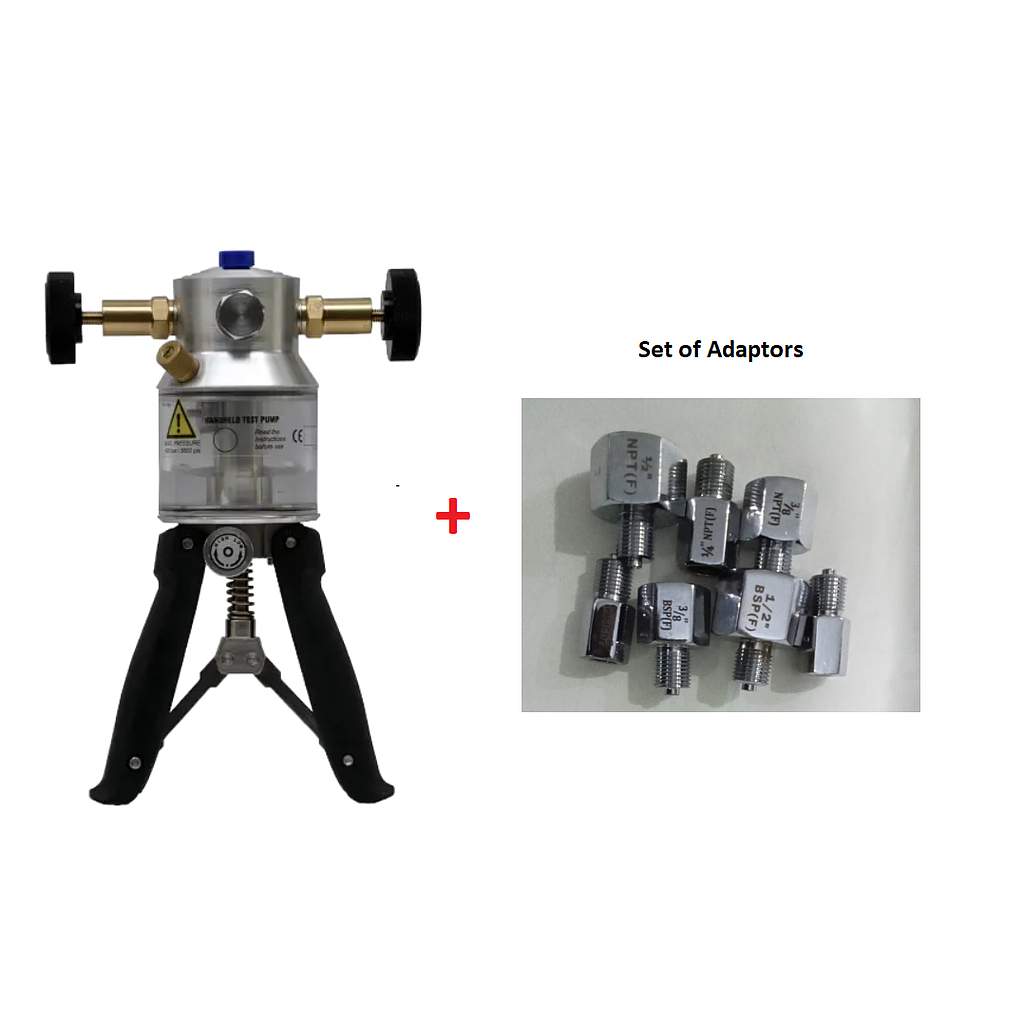
Where pressure calibrators fit in real maintenance and calibration work
Pressure calibration is common in process industries, utilities, HVAC, laboratories, and industrial manufacturing. Technicians often need to compare an installed device against a known reference, apply a controlled pressure source, and verify output signals such as mA or voltage at the same time. In these situations, equipment in this category supports both straightforward field checks and more structured calibration procedures.
Compared with general-purpose test tools, pressure calibrators are designed around pressure generation and reference measurement. Some models focus on pressure only, while others combine pressure with electrical measurement, loop power, or support for transmitter testing. If your work also involves broader signal simulation and process verification, it may be useful to review multifunction calibrators alongside dedicated pressure instruments.
Main product types in this category
Not every application needs the same type of device. Portable units are often chosen for on-site inspection and commissioning, while higher-end reference instruments suit demanding calibration tasks. Hand pumps and hose kits, meanwhile, play an important role because a calibrator is only as useful as the pressure source and connection method supporting it.
Examples from this category illustrate that range well. The FLUKE-721-3630 and FLUKE-721-3650 are pressure calibrators intended for measuring pressure while also supporting related electrical checks. For high-accuracy reference work, models such as the FLUKE-700RG31 Pressure Gauge Calibrator and FLUKE-730G31 High-precision Digital Piezometer are relevant when tighter verification is needed. Supporting equipment such as the FLUKE-700LTP-1 low-pressure pump, the FLK-700HTP-2/APAC hydraulic test pump, and hose kits like FLUKE-700TTH10K help complete the test setup rather than serving as standalone replacements for the calibrator itself.
Choosing by pressure range, media, and test method
One of the first selection points is the pressure range you need to cover. Low-pressure applications, including vacuum and fine differential checks, benefit from tools that provide good control at the lower end of the scale. For example, a hand-operated pump such as the FLUKE-700LTP-1 is suited to low-pressure generation, while higher-pressure verification may require hydraulic solutions such as the FLK-700HTP-2/APAC or a complete kit like the FLK-700HTPK2/APAC.
The test medium also matters. Pneumatic calibration is commonly used for air and gas applications, while hydraulic generation is preferred when higher pressures are required and stable generation is more critical. A kit such as the FLK-700PTPK/APAC Pneumatic Test Pressure Kit is a good example of a setup intended for pneumatic work, whereas hydraulic kits are better aligned with demanding high-pressure tasks. If your application centers on compact manual generation for air systems, the Dwyer A-396A calibration pump is another useful reference point within the category.
Why accessories matter as much as the calibrator
In practical use, many calibration issues come from connections rather than the reference instrument itself. Leaks, incompatible fittings, trapped air, poor hose condition, or unstable hand pumping can all affect repeatability. That is why this category includes not only pressure calibrators, but also pumps, hose kits, and related accessories that help create a stable and safe test arrangement.
The FLUKE-700TTH5K and FLUKE-700TTH10K premium transmitter test hose kits are examples of accessories that support transmitter calibration by simplifying connection between the pressure source and the device under test. Complete kits can also reduce setup time in field service because hoses, adapters, and protective carrying cases are already matched to the intended workflow. For users comparing different equipment structures, it can also be helpful to explore temperature calibrators and other calibration families to see how accessory ecosystems differ by application.
Representative manufacturers in this category
This category includes solutions associated with recognized calibration and instrumentation brands, with FLUKE appearing prominently in the current product selection. FLUKE is widely used in field calibration environments because its portfolio covers handheld calibrators, test pumps, hose kits, and reference-style pressure instruments that can be combined into complete workflows.
Dwyer also appears in this category, particularly in relation to practical pressure generation tools such as calibration pumps. Other manufacturers listed for broader category context include Fluke (Calibration), MKS, OMEGA, YOKOGAWA, Additel, and Sika. The right brand choice typically depends less on name recognition alone and more on the required range, portability, calibration method, and compatibility with existing maintenance procedures.
Typical selection criteria for engineers and buyers
When sourcing a pressure calibrator or related kit, buyers usually look beyond maximum pressure. A more useful approach is to match the device to the job: field or bench use, pressure-only or pressure-plus-electrical testing, required reference accuracy, and the need for included pumps or hoses. In many maintenance teams, portability and setup speed are just as important as measurement capability.
It is also worth considering whether your workflow requires only a dedicated pressure instrument or a broader calibration platform. For pressure-focused tasks, a dedicated pressure calibration solution is often the most direct choice. If the same technicians also verify current loops, RTD inputs, or other process signals on a routine basis, a combined strategy with more than one calibrator type may be more efficient over time.
Examples of use cases across the category
A maintenance technician checking a pressure transmitter may pair a reference instrument with a hand pump and test hose kit to apply known pressure points and compare output. A calibration lab may prefer a higher-precision digital reference such as the FLUKE-730G31 when tighter tolerances or formal records are involved. For gauge verification in industrial service, a device such as the FLUKE-700RG31 may be more appropriate when the priority is reliable reference measurement over a wide pressure span.
On the other hand, users working on portable field service tasks may choose an integrated pressure calibrator like the FLUKE-721 series, especially when pressure and electrical checks need to be performed in one workflow. This distinction is important because the most suitable product is often determined by the calibration procedure itself, not simply by the highest available range.
Final considerations before selecting a pressure calibration setup
A well-matched pressure calibration setup should support the way your team actually works: the ranges you test most often, the process connections you encounter, and the level of confidence required in the result. In many cases, the best solution is not a single instrument alone, but a combination of calibrator, pump, hoses, and fittings that work together reliably in the field or in the lab.
By comparing pressure capability, application type, and accessory compatibility, buyers can narrow this category more effectively and avoid over- or under-specifying the equipment. If you are selecting for transmitter verification, gauge checking, or general process maintenance, this Pressure Calibrator category provides a practical starting point for building a calibration workflow that is accurate, repeatable, and easier to deploy.
Types of Pressure Calibrator (999)
-
-
-
-
-
-
-
-
-
-
-
-
-
-
-
-
-
-
-
-
-
-
-
-