


Thermodynamic equipment
Understanding heat, energy transfer, and engine principles is much easier when learners can see processes directly and work with equipment designed for demonstration or structured experiments. In schools, technical training environments, and research-oriented teaching labs, the right instruments help turn abstract thermodynamic concepts into measurable results and repeatable classroom activities.
Thermodynamic equipment in this category supports that goal with a practical mix of demonstration models, timing tools, and experiment sets for heat-related instruction. The range is especially relevant for physics education, applied sciences teaching, and training environments where clear visualization and hands-on learning matter.
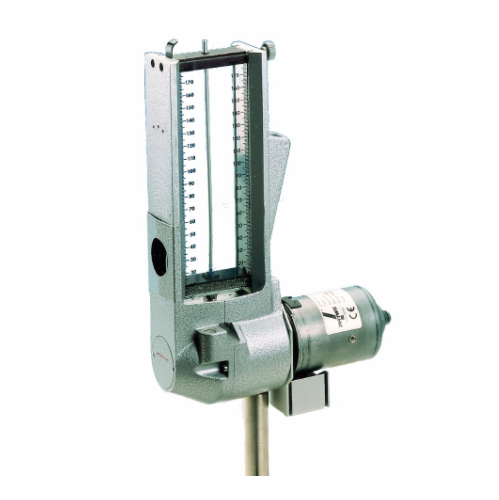
Equipment for teaching heat, energy, and thermal processes
This category brings together devices used to explain core topics such as heat transfer, thermal expansion, temperature measurement, changes of state, and energy conversion. Instead of focusing on a single instrument type, it covers a broader educational ecosystem for thermodynamics, from simple timing accessories to complete experiment kits and transparent engine models.
That makes the category suitable for educators who need equipment for different teaching levels. Some items are designed for introductory science classes, while others support more advanced demonstrations in physics and applied sciences. For buyers building a broader laboratory setup, it can also be useful to compare related areas such as mechanical device equipment when motion and force topics overlap with thermal concepts.
Transparent engine models for visual learning
One of the most useful ways to teach thermodynamics is to show how thermal energy is converted into mechanical motion. Transparent functional models make this easier by exposing the internal structure of engines and helping students follow moving parts, cycle stages, and the relationship between heat input and mechanical output.
Examples in this category include the PHYWE 04652-00 Stirling Engine Transparent Functional Model, the PHYWE 04638-00 Steam Engine Transparent Functional Model, and the PHYWE 04636-00 Four Stroke Cycle Engine Transparent Functional Model. There are also models for diesel, two-stroke, and Wankel engine principles. These products are particularly valuable in demonstration-based teaching because removable or clearly separated parts can improve conceptual understanding without requiring a full industrial machine.
For institutions standardizing around one supplier, PHYWE is a key manufacturer in this range, with products oriented toward structured science and technical education.
Heat experiment sets for classroom and lab instruction
When the goal is not only to demonstrate but also to run guided experiments, complete sets can save preparation time and improve consistency across lessons. In this category, several PHYWE kits are tailored to heat-related experiments, combining vessels, rods, thermometers, supports, and other components required for classroom use.
The PHYWE 13236-88 DEMO Beginner Applied Sciences Set Heat is aimed at introductory teaching, while the PHYWE 15530-88 DEMO Advanced Physics Set Heat supports a wider range of demonstration experiments, including thermal expansion, heat transfer, thermal energy, and states of matter. For student-centered activities, the PHYWE 15275-88 Student Set Heat 2 and PHYWE 25274-88D Student Set Heat 1 Digital extend thermodynamics teaching into structured practical work, including digital temperature measurement in the digital set.
If your application focuses more specifically on the measurement side of thermal performance, related solutions may also be found under energy testing equipment, depending on the training scope.
Why stopwatches still matter in thermodynamic experiments
Time is a basic but important variable in many educational experiments. Heating duration, cooling intervals, response time, and phase-change observations often require simple, reliable timing. That is why stopwatches remain relevant even in a category centered on thermal science.
The PHYWE 03071-01 Stopwatch and PHYWE 24025-00 Digital Stopwatch are suitable examples for classroom timing tasks. Features such as split timing, dual measurement functions, and 1/100 s resolution can be useful for student exercises or demonstration procedures where repeatability matters. In many training environments, these compact tools complement larger experimental setups rather than acting as stand-alone devices.
How to choose thermodynamic equipment for your application
The right selection depends first on the teaching objective. If the priority is conceptual explanation, transparent engine models are often the better choice because they make operating principles visible. If the objective is structured experimentation, complete heat sets are usually more efficient because they gather the required accessories into one coordinated package.
It is also important to consider learner level, whether the equipment is intended for instructor-led demonstrations or student group work, and how often setups need to be stored and moved. Sets supplied in organized storage cases or stackable boxes can simplify inventory control and reduce lesson preparation time. For courses that connect heat with electricity and sensing, it may also be useful to explore electrical and magnetic testing equipment where cross-disciplinary experiments are part of the curriculum.
Typical users and application environments
This category is especially relevant for schools, universities, vocational training centers, STEM labs, and educational distributors. Buyers in these environments often need equipment that is durable enough for repeated use, easy to understand in front-of-class demonstrations, and flexible enough to support different lesson plans.
Thermodynamic teaching equipment is also useful in teacher training and curriculum development, where experiment reproducibility and clear visual communication are priorities. Demonstration sets can support front-of-class instruction, while student sets allow more active participation in small-group practical sessions.
Building a more complete educational physics setup
Thermodynamics rarely stands alone in technical education. Many lessons naturally connect to mechanics, energy conversion, measurement, and materials behavior. Because of that, buyers often assemble these products as part of a wider laboratory or training environment rather than as isolated purchases.
A transparent steam or Stirling engine model can support discussions about motion and efficiency, while heat experiment kits help explain conduction, convection, and temperature change in measurable terms. Adding timing devices improves basic data collection in classroom exercises. This broader approach helps create a more coherent learning path from observation to experimentation.
Final considerations
Choosing suitable thermodynamic teaching equipment is mainly about matching the product type to the learning scenario. Demonstration models are ideal for visual explanation, experiment sets support guided practical work, and simple accessories such as stopwatches help structure measurements during lessons.
Whether you are equipping a school lab, updating a vocational training room, or sourcing products for educational resale, this category offers a focused foundation for heat and energy instruction. Reviewing the intended teaching level, experiment depth, and storage or handling needs will make it easier to identify the most appropriate solution.
-
-
-
-
-
-
-
-
-
-
-
-
-
-
-
-
-
-
-
-
-
-
-
-