


Modern physics equipment
From photoelectric experiments to wave behavior and microwave propagation, modern physics teaching depends on equipment that makes abstract concepts observable. In laboratories, classrooms, and training environments, the right setup helps learners move from theory to measurable results, whether they are studying radiation, electromagnetic waves, interference, or fundamental constants.
Modern physics equipment supports this transition by combining demonstration tools, experiment-ready kits, and digital measurement devices. This category is especially relevant for schools, universities, technical institutes, and research-oriented training centers that need reliable instruments for structured physics education and hands-on investigation.
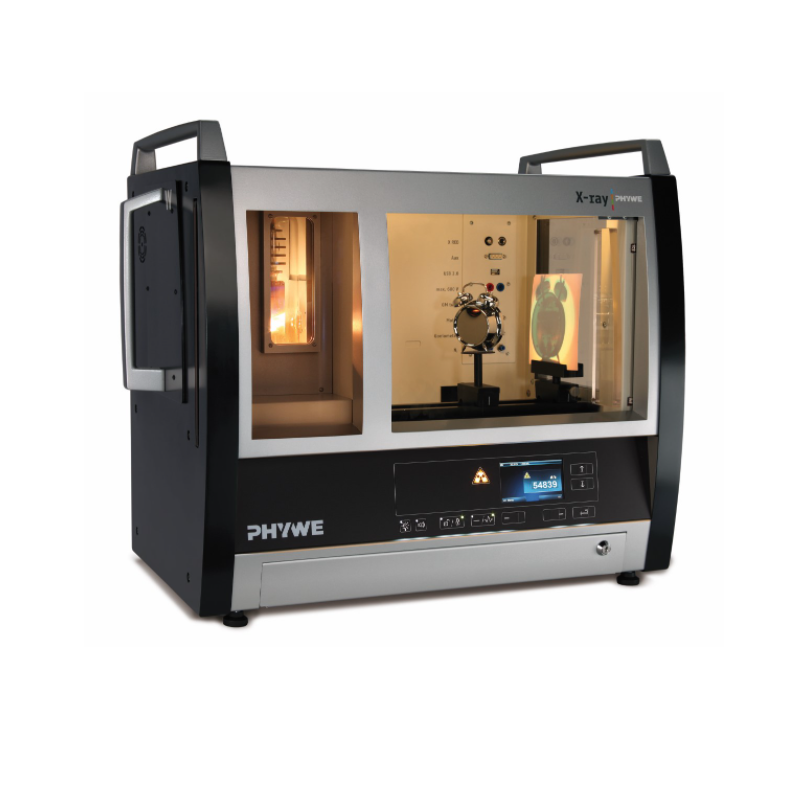
Built for experimental physics education
Unlike general classroom accessories, this category focuses on equipment used to demonstrate and measure phenomena that belong to advanced or contemporary physics topics. These may include the photoelectric effect, radioactivity, wave interference, diffraction, and microwave behavior. In practice, such instruments are used not only to explain principles visually, but also to support repeatable experiments and data-based analysis.
For institutions building a complete teaching environment, modern physics tools often work alongside broader laboratory resources such as electrical and magnetic testing equipment. This creates a more connected lab ecosystem where students can compare classical and modern physics concepts within the same program.
Typical experiments covered in this category
The product range represented here is suitable for several important experiment themes. One example is the study of the photoelectric effect using the PHYWE 06779-00 Photocell for h-determination, with housing. In this type of setup, learners can investigate the relationship between light and electron emission, which is central to understanding quantum physics and the determination of Planck's constant.
Another important area is radiation measurement. Devices such as the PHYWE 12937-01 Cobra SMARTsense- Radioactivity and PHYWE 12937-11 Cobra SMARTsense - Radioactivity support mobile or digital measurement workflows. These tools are useful where instructors want a more flexible way to record values, visualize data, and integrate experiments with software-based teaching.
Wave-related experiments are also strongly represented. Kits such as PHYWE P1120701, PHYWE P1120801, PHYWE P1121001, and PHYWE P1121101 help demonstrate interference, diffraction, and phase-dependent wave patterns. For electromagnetic studies, PHYWE microwave experiment sets such as P2460203, P2460303, and P2460403 allow learners to explore polarization, reflection, transmission, refraction, and the inverse square law in a structured and highly visual format.
Why this equipment matters in teaching and training
Modern physics is often conceptually difficult because many effects cannot be understood through intuition alone. Equipment that turns these ideas into visible patterns or measurable signals helps instructors explain the subject more clearly. This is especially important in technical education, where learners are expected to connect equations, physical behavior, and instrumentation.
Well-chosen teaching systems also improve lab efficiency. Instead of relying only on theoretical explanation, instructors can build experiments around ready-to-use boards, dedicated sensors, photocells, or complete microwave and ripple-tank setups. In many cases, this shortens preparation time while improving consistency across repeated lessons or student groups.
Representative PHYWE solutions in this category
PHYWE is the key manufacturer featured in this category, with products that cover both demonstration-based teaching and more advanced practical work. For example, the PHYWE 02150-00 Demo Physics Board with Stand and PHYWE 15510-01 Demo Advanced Mechanics 1 Necessary Acessories can support broader instructional setups where experiment components need to be arranged clearly for classroom use.
At the same time, PHYWE’s specialized devices make it easier to target distinct modern physics topics. The photocell solution supports quantum-related experiments, the Cobra SMARTsense range introduces digital data acquisition for radioactivity measurement, and the ripple tank and microwave experiment sets provide visual access to wave and electromagnetic phenomena. This variety is useful for institutions that want to expand their laboratory capability step by step instead of sourcing unrelated devices from multiple ecosystems.
How to choose the right modern physics equipment
Selection usually starts with the intended learning outcome. If the goal is to demonstrate a single principle in a clear and repeatable way, a focused experiment set may be the right choice. If the requirement is broader, such as supporting multiple class levels or combining demonstration and measurement, it may be better to choose modular equipment that can be used across different experiments.
It is also helpful to consider how results will be recorded. Some training environments still prefer standalone demonstration systems, while others need sensors that connect to software for graphing and analysis. When digital workflows are important, products like the Cobra SMARTsense radioactivity devices can be relevant because they support easier data capture and visualization during lab sessions.
Another practical factor is how this category fits into the wider physics lab. For example, users planning a more complete setup may also review mechanical device options or thermodynamic equipment where interdisciplinary teaching requires multiple experiment domains.
Applications across schools, universities, and technical labs
This category is suitable for a wide range of educational and institutional users. Secondary schools may use it for guided demonstrations that introduce advanced concepts without excessive setup complexity. Universities and colleges can use the same types of equipment for deeper experimental work, especially where students are expected to collect data, interpret results, and compare observations with theoretical models.
Training centers and research-support environments may also benefit from these tools when physics principles need to be linked to instrumentation skills. Topics such as radiation detection, wave analysis, and electromagnetic propagation are relevant not only in physics education, but also in broader engineering and applied science contexts. Where energy-related experiments are part of the curriculum, it can also be useful to explore related energy testing equipment.
Supporting clearer experiments and better learning outcomes
The value of modern physics equipment is not just in having specialized apparatus on the bench. Its real role is to help users observe effects that are otherwise difficult to imagine, while making measurements more structured and easier to interpret. That applies whether the task is demonstrating the photoelectric effect, measuring radioactivity, or visualizing microwave propagation and wave interference.
For buyers comparing options in this category, the most effective approach is to match each device to the experiment scope, learner level, and measurement method required in the lab. With a focused selection of demonstration tools, sensors, and experiment kits, it becomes much easier to build a practical teaching environment that supports both conceptual understanding and hands-on physics work.
-
-
-
-
-
-
-
-
-
-
-
-
-
-
-
-
-
-
-
-
-
-
-
-