


Botany equipment
From plant structure and water transport to photosynthesis and biochemical activity, practical observation is essential for effective life science teaching and research. The right laboratory and classroom tools help turn abstract biological concepts into measurable, visible processes, making Botany equipment relevant for schools, universities, training centers, and applied research environments.
This category brings together instruments and teaching models used to study plant anatomy, physiology, growth, and related experimental methods. It covers both demonstration-oriented materials and hands-on tools that support observation, measurement, and experiment-based learning in plant science.
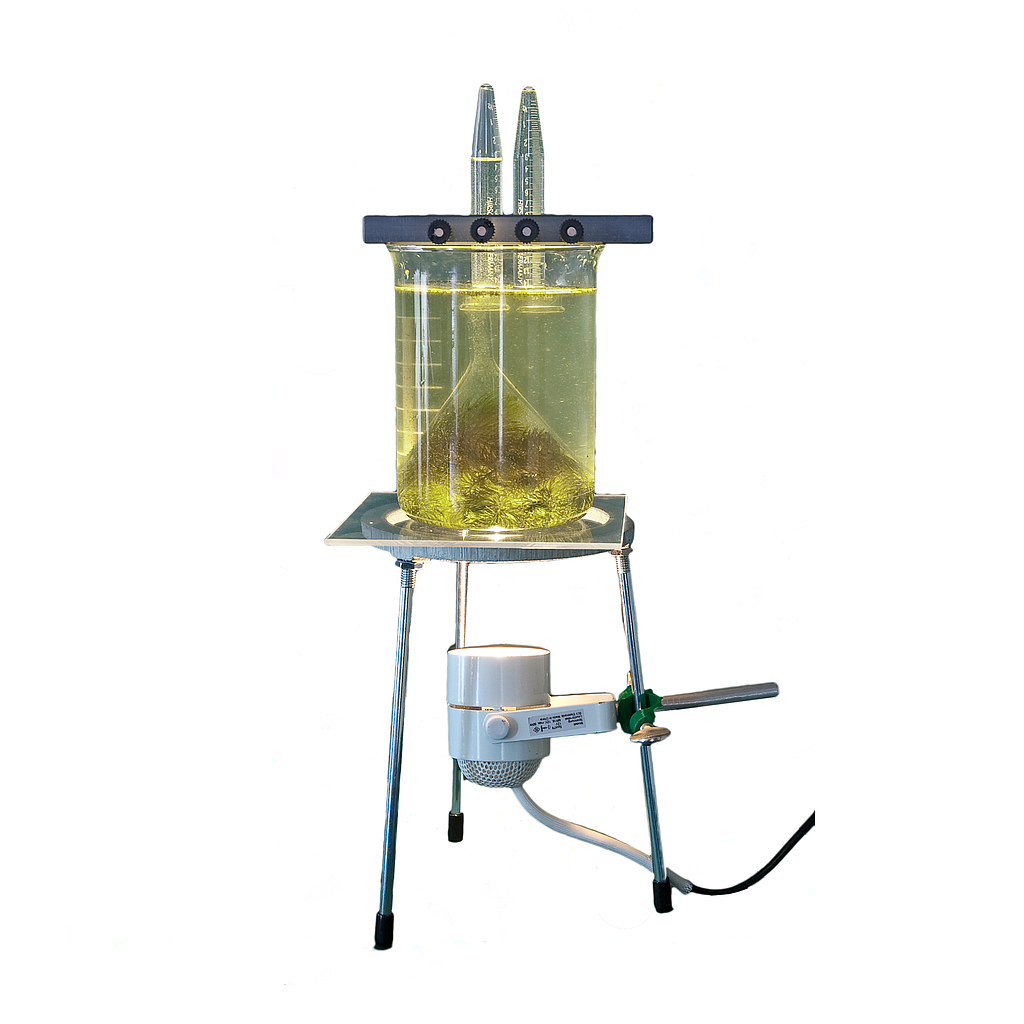
Where botany equipment is used
Plant science is taught across many levels, from introductory biology classes to advanced laboratory work. In practice, this means users may need equipment for anatomical models, capillary and osmotic demonstrations, UV-based analysis, or experimental sets focused on plant physiology and biochemistry.
For broader laboratory programs, botany tools often work alongside related categories such as cell biology equipment when lessons extend into membranes, transport, and cellular processes. In environmental or sustainability-focused teaching, they may also complement ecology and environment equipment for topics linked to biomass, nutrient cycles, and plant-environment interaction.
Main product types in this category
A well-structured botany range typically includes teaching models, experimental apparatus, and specialized lamps or analysis tools. Each group serves a different purpose: models support visual explanation, simple apparatus help demonstrate core physical and physiological principles, and complete sets allow guided practical work with repeatable results.
For example, anatomical teaching can be supported by models such as the PHYWE MOD-LEAF Leaf Structure Model, the PHYWE MOD-DICOT Dicot Stem Structure Model, and the PHYWE MOD-MONOCOT Monocot Stem Structure Model. These products are useful when learners need to compare tissues and vascular structures in leaves, dicot stems, and monocot stems without relying solely on microscope slide preparation.
At the experiment level, tools such as the PHYWE KLA-110-125 Osmometer and the PHYWE 03611-00 Capillary Tube help demonstrate osmosis and capillary action in a direct, understandable way. For UV-based observation in chromatography or fluorescence-related work, options like the KRUSS UV240 UV Analysis lamp and the PHYWE 33972-93 UV Analysis Lamp are relevant examples within the broader plant and biological laboratory workflow.
Supporting plant physiology and biochemistry experiments
Many users searching for botany equipment are not only looking for static teaching aids. They also need systems that support active experiments on photosynthesis, transpiration, respiration, enzyme activity, and other plant-related biochemical processes. In these situations, complete educational sets can save time by bringing multiple experiment themes into one coordinated setup.
The PHYWE 15620-88D Student Set Biochemistry And Plant Physiology BPS is a good illustration of this type of solution. It is designed around multiple experiments involving plant and biochemical topics, combining sensors and laboratory accessories to help students collect and interpret data rather than only observe outcomes. This is especially useful in teaching environments that want a more measurement-based approach to biology education.
When program scope includes renewable resources or biomass cycles, the PHYWE LEX-1710 leXsolar-BioEnergy Ready-to-go adds another applied perspective. While it reaches beyond classical plant anatomy, it supports understanding of plant growth, biomass generation, and biological conversion processes, making it relevant for interdisciplinary botany and environmental science courses.
How to choose suitable botany equipment
The most practical starting point is the intended use case. If the goal is concept explanation in a classroom, anatomical models and simple demonstration apparatus may be more appropriate than complex kits. If the goal is repeated student experiments, then complete sets with integrated components are usually easier to manage, store, and standardize.
It is also important to consider the teaching level and method. Introductory classes often benefit from equipment that makes plant structures easy to visualize, while advanced users may prioritize tools for investigating transport, gas exchange, pH-related activity, or light-dependent processes. In short, the right selection depends on whether the focus is visual learning, guided experimentation, or quantitative measurement.
Another useful criterion is workflow compatibility. A UV lamp used for chromatography-related tasks, for instance, serves a very different role from a stem model or osmometer. Choosing equipment by experimental objective helps avoid mismatched purchases and makes it easier to build a coherent teaching or research setup over time.
Representative manufacturers in this range
This category includes products from recognized educational and laboratory suppliers such as PHYWE and KRUSS. Both names are relevant in academic and laboratory contexts, but they typically serve different equipment needs within the plant science workflow.
PHYWE is strongly represented in teaching-oriented botanical and biological experiments, including structure models, practical demonstration devices, and integrated experimental sets. KRUSS appears here through UV analysis equipment that can support observation tasks where ultraviolet illumination is needed. Rather than choosing by brand alone, most buyers will get better results by matching the product format to the planned lesson, lab exercise, or demonstration method.
Building a broader life science teaching setup
Botany is closely connected with several adjacent biological disciplines. Plant transport, membrane behavior, gas exchange, and tissue structure often overlap with subjects that are explored elsewhere in a life science lab. For that reason, procurement is often more effective when the category is viewed as part of a wider educational ecosystem rather than as an isolated purchase list.
For example, plant-focused teaching may naturally connect with human physiology equipment when comparing transport or respiration concepts across living systems. A broader setup can also include complementary biological resources depending on curriculum depth, student level, and the balance between demonstration and hands-on practical work.
What buyers typically look for on a botany category page
In most cases, buyers want more than a product list. They are trying to understand whether a category supports classroom demonstration, laboratory experiments, curriculum alignment, or interdisciplinary biology teaching. Useful botany equipment should therefore be easy to place within real applications such as plant anatomy teaching, osmosis demonstrations, capillary effect experiments, UV-based observation, and plant physiology studies.
This category is suited to users who need a mix of educational models and practical apparatus for plant science. Whether the requirement is a simple leaf structure model, an osmometer for transport principles, or a more complete set for biochemical and physiological investigations, the selection should reflect the actual learning outcomes and experimental depth required.
Choosing botany equipment becomes much easier when the focus stays on teaching goals, experiment type, and how each item fits into the broader biology workflow. A clear match between application and equipment will help create more effective lessons, more consistent lab practice, and better long-term value from the category.
-
-
-
-
-
-
-
-
-
-
-
-
-
-
-
-
-
-
-
-
-
-
-
-