


Medical equipment
Hands-on physiology and human measurement activities require equipment that is easy to use, clear in its output, and appropriate for teaching, training, and applied research environments. In these settings, medical equipment often serves as the bridge between theory and practice, helping users observe cardiovascular, respiratory, and related body signals in a structured and repeatable way.
This category brings together instruments and accessories that support practical work in human physiology, biomedical training, and exercise-related testing. The product range shown here is especially relevant for laboratories, educational institutions, skills training rooms, and research-oriented learning spaces that need dependable tools for demonstration, measurement, and data collection.
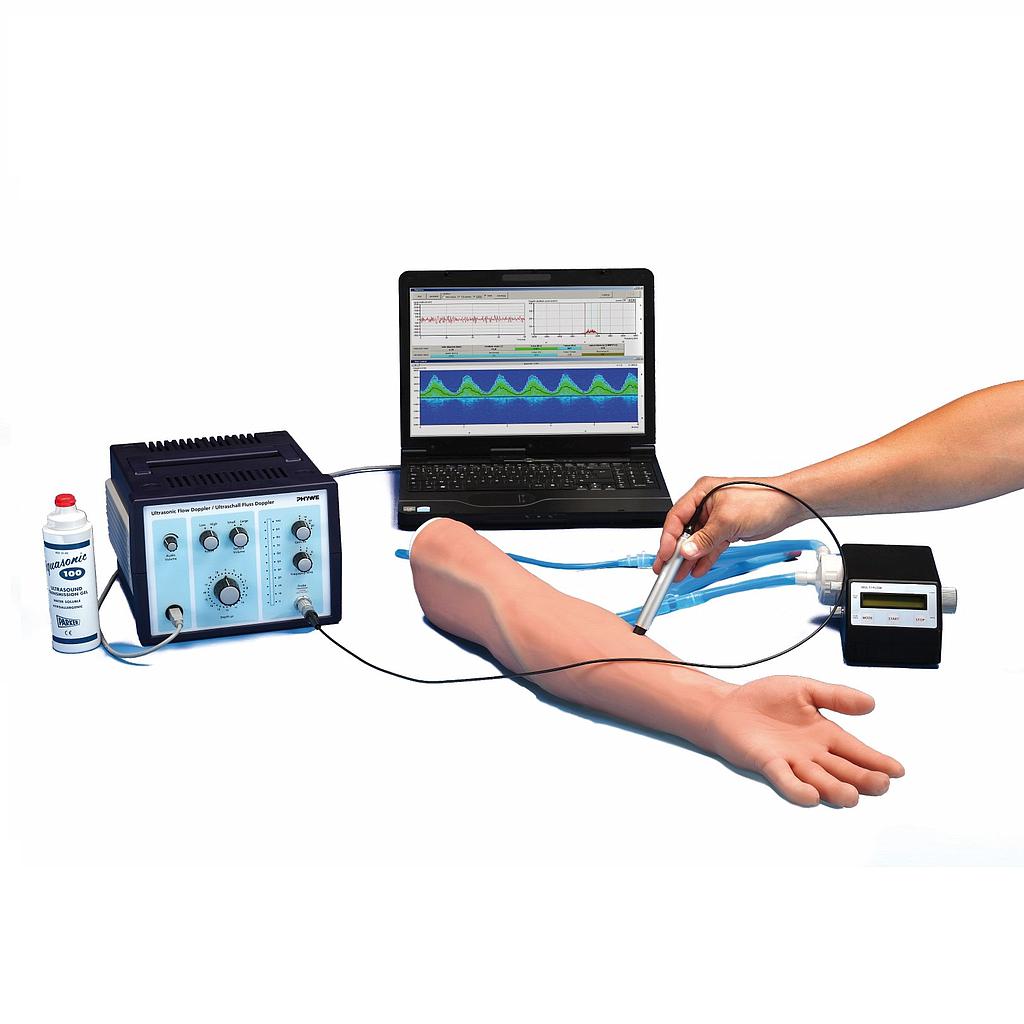
Where this category fits in applied science and training
Medical equipment in an applied science context is not limited to clinical use. It is also widely used for education, demonstration, and controlled measurement tasks where learners need to understand how the body responds to activity, stress, breathing, and circulation. That makes this category valuable for schools, universities, technical institutes, and research training centers.
Depending on the setup, users may combine these products with broader technical equipment for data handling, experiment support, or integrated lab instruction. In practice, the category covers both direct measurement devices and supporting components that improve connectivity, usability, or test workflow.
Typical equipment found in this range
The selection represented here focuses on human physiology and performance-related measurement. Examples include sensor-based solutions for pulse, blood pressure, electrocardiography, respiration, and skin resistance, as well as treadmill-based systems used in cardio-pulmonary exercise testing.
Products from PHYWE illustrate the teaching and laboratory side of the category, with Cobra SMARTsense devices designed for recording physiological values in a user-friendly format. Representative examples include the PHYWE 12935-01 Cobra SMARTsense - Pulse (30~200 bpm), the PHYWE 12934-01 Cobra SMARTsense - EKG (0~4.5 mV), the PHYWE 12936-01 Cobra SMARTsense - Spirometer (± 10 l/s), and the PHYWE 12944-00 Cobra SMARTsense - Blood Pressure (0~375 mmHg). These devices are suited to practical demonstrations and measurement exercises where signal visibility and ease of use matter.
Exercise testing and treadmill-based measurement setups
Some applications require more than a standalone sensor. In exercise physiology, rehabilitation training, and performance evaluation, treadmill-based systems are often part of a larger measurement setup. This is where solutions from Lode are relevant, especially for environments that need controlled speed and incline conditions during cardio-pulmonary testing.
A product such as the Lode Valiant 2 Cardio-Pulmonary Exercise Testing Treadmill Stands reflects this type of use case. Around the main treadmill platform, optional or supporting components may play an important role, including the Lode P945815 Programmable Control Unit with 7" touch screen for treadmill - ordered additionally, the Lode P945822 SpO2 for control unit with touch panel for treadmill (ordered afterwards), the Lode P945833 Bluetooth HR option (ordered afterwards), and the Lode 930911 RS232 cable male-female. These items are best understood as part of a complete testing ecosystem rather than isolated devices.
How to choose the right medical equipment for your application
The right choice depends first on measurement objective. If the goal is to teach basic cardiovascular physiology, a pulse or blood pressure sensor may be sufficient. If learners need to observe electrical heart activity, an EKG device is more suitable. For breathing analysis, a spirometer is the more relevant option. In exercise testing, the requirement may shift toward integrated systems that combine motion control with physiological monitoring.
It is also important to consider how data will be captured and reviewed. In many training and research environments, ease of connection, software compatibility, and straightforward operation are just as important as the measurement itself. Accessories such as communication cables, Bluetooth options, and programmable control units can therefore be essential when building a usable setup, not just optional extras.
Key selection criteria for laboratories and educational facilities
When comparing products in this category, buyers usually look at a few practical factors beyond the headline measurement function. These include the type of signal being recorded, the expected learning level of the users, whether the equipment will be used for demonstration or repeated hands-on practice, and how easily the device can fit into an existing bench or lab workflow.
- Application scope: teaching, training, demonstration, or exercise-related testing
- User interaction: simple student operation versus instructor-controlled setups
- System integration: standalone sensor, connected accessory, or part of a larger platform
- Measured parameter: heart rate, ECG/EKG, blood pressure, respiration, oxygen-related monitoring, or skin response
- Expandability: availability of add-ons and interface accessories for future needs
For institutions that manage a wider practical training environment, it can also be useful to review the broader medical equipment range alongside other instructional tools to ensure consistency across courses and lab stations.
Why accessories and options matter in this category
In technical B2B purchasing, system performance often depends on the details around the main instrument. A cable, interface option, touch control unit, or physiological add-on may determine whether the equipment can communicate with other devices, present data clearly to the operator, or support a specific training scenario.
That is why products like the Lode 930911 RS232 cable male-female or the Lode P945833 Bluetooth HR option should be viewed in context. They may not be the center of the setup, but they contribute to system connectivity, workflow flexibility, and a more complete measurement environment. For buyers equipping a lab or replacing parts in an existing installation, these supporting items can be just as important as the primary unit.
Suitable use cases across education and applied research
This category is especially relevant where users need to observe real physiological responses rather than rely only on theory. Common scenarios include classroom demonstrations of blood pressure and pulse measurement, lab sessions focused on heart or lung function, and structured exercise testing in sports science or rehabilitation-related environments.
Because the range includes both sensor-oriented teaching tools and treadmill-related testing components, it supports multiple levels of use. Some organizations may need compact devices for routine instruction, while others may build more advanced setups for repeated testing, comparative studies, or supervised performance assessment. In both cases, the value lies in selecting equipment that matches the intended training depth and operating workflow.
Final thoughts
A well-planned medical equipment setup supports clearer teaching, more effective practical training, and more reliable measurement in applied science environments. Whether the requirement is a physiology sensor for student experiments or a treadmill-based configuration for cardio-pulmonary exercise testing, the best results usually come from matching the device, accessories, and measurement purpose from the start.
Explore this category to compare solutions from PHYWE and Lode, identify the right combination of core devices and supporting options, and build a setup that fits your laboratory, training, or research application with greater confidence.
-
-
-
-
-
-
-
-
-
-
-
-
-
-
-
-
-
-
-
-
-
-
-
-