


Textile moisture meter
Controlling moisture is a practical requirement in textile production, storage, and quality inspection. When fabric absorbs too much water, it can shrink, change handling characteristics, or become vulnerable to mold during warehousing. If it is too dry, static buildup, brittleness, and unstable processing can also become issues. A reliable textile moisture meter helps teams check material condition quickly and make better decisions before cutting, sewing, packing, or long-term storage.
This category focuses on instruments and accessories used to measure moisture in textiles and related fibers. It includes handheld solutions for routine checks, probe-based accessories for deeper measurement, and specialized systems designed for higher-temperature or process conditions.
Why moisture measurement matters in textile operations
Moisture affects more than just storage conditions. In cotton, wool, rayon, and similar materials, the water content of the material can influence dimensional stability, surface feel, weight consistency, and processing behavior. This is especially important in environments where textile lots move between receiving, inspection, conversion, and shipment.
Routine checks with a dedicated meter help identify material that may have absorbed moisture during transport or warehousing. In production settings, this makes it easier to separate environmental humidity problems from actual material moisture issues, and to respond before defects appear downstream.
Typical applications for textile moisture meters
These instruments are commonly used in incoming goods inspection, warehouse control, pre-processing checks, and final QA. A handheld meter can be useful for fast spot checks on cotton lint, cotton seed, wool, or viscose/rayon, while a probe or electrode may be preferred when better contact with the sample is needed.
In some installations, the measurement requirement goes beyond room-temperature fabric inspection. For demanding process environments, online or high-temperature moisture analyzers can support continuous monitoring where gases, heat, and process stability are part of the application. That makes this category relevant not only for garment and fabric handling, but also for broader textile-related industrial processes.
Product types available in this category
The range in this category includes both complete instruments and measurement accessories. For example, the DELMHORST CX-30W/CS Humidity meter is suited to routine checks across several textile-related materials, with ranges listed for cotton lint, cotton seed, wool, and viscose/rayon. It is designed for practical field use, with a display that supports easy reading during inspections.
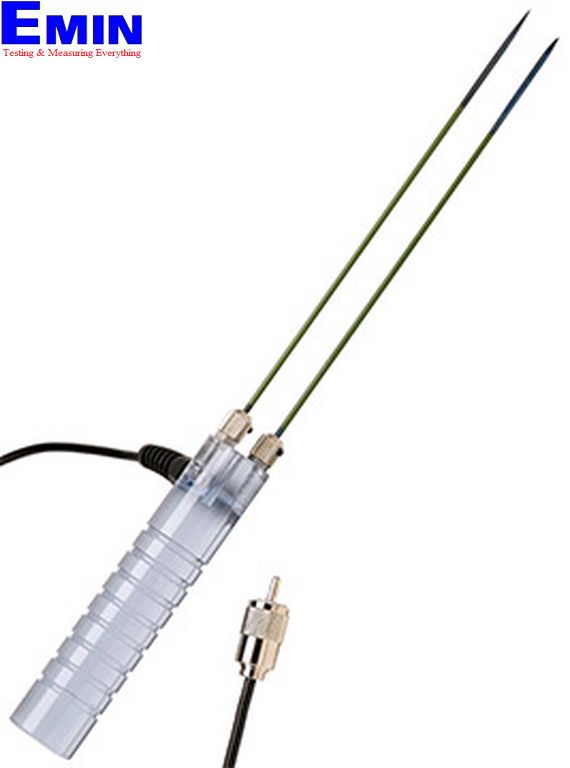
Accessories also play an important role in obtaining stable readings. The DELMHORST 37-E/C Electrode for Textiles and DELMHORST 30E/C Moisture probe are examples of supporting components used with compatible meters to improve contact and measurement convenience for textile applications. Instead of treating accessories as secondary, it is better to see them as part of the measurement setup that helps the instrument match the sample form.
For higher-temperature and online applications, Chang AI TP19 and TP19-1 provide a different measurement approach. These models are intended for plug-in, online measurement and include communication options such as RS485, which can be useful when moisture data must be integrated into a control or monitoring system.
How to choose the right textile moisture meter
The first consideration is the material type. Textile moisture measurement is not one-size-fits-all, because cotton, wool, and regenerated fibers can behave differently. If your work mainly involves routine warehouse checks or incoming material verification, a portable handheld instrument may be the most practical option.
The second factor is sample condition and measurement depth. Surface checks are useful for quick screening, but some applications benefit from an electrode or probe that can contact the material more directly. This is particularly relevant when inspecting dense packs, layered material, or samples where surface dryness may not reflect internal moisture.
Operating environment is another key point. If measurements are made near process heat or within continuous industrial systems, a standard handheld meter may not be enough. In that case, high-temperature analyzers such as the Chang AI TP19 series may be more appropriate than general-purpose portable devices.
Featured manufacturers in this category
DELMHORST is a well-known name in portable moisture measurement and is strongly represented in this category through both complete meters and textile-related accessories. This makes it easier for users to build a compatible measurement kit instead of sourcing the meter and probe separately from different systems.
Chang AI adds another layer to the category with online and high-temperature humidity measurement solutions. These products are relevant for users who need process monitoring, communication output, and installation within a larger industrial environment rather than simple spot inspection.
Related moisture measurement categories worth exploring
Some users need one instrument for multiple materials, while others are comparing textile meters with devices used in neighboring applications. If your inspection work extends across several material types, a multifunction moisture meter category may be a useful next step for broader comparison.
For packaging, storage checks, or visual moisture indication in specific workflows, moisture detecting papers can also complement instrument-based measurement. They do not replace a proper meter, but they may support quick condition checks in selected handling and storage scenarios.
Practical buying considerations for B2B users
In industrial and commercial environments, selecting a meter is not only about the measuring range. Buyers should also consider ease of use, compatibility with probes or electrodes, display readability, power requirements, and whether the instrument will be used for occasional audits or frequent daily checks. For online systems, communication interface, installation method, and calibration intervals become more important.
It is also useful to think about workflow. A warehouse team may prioritize portability and fast results, while a technical department may need more repeatable readings, deeper sample access, or data communication. Matching the instrument to the actual inspection process usually delivers better value than choosing only by headline specification.
Frequently asked questions
Can one textile moisture meter measure different fibers?
Some models support multiple textile-related materials, but suitability depends on the meter design and the supported measurement ranges listed for those materials. It is best to check whether your main fiber types are covered.
Are probes and electrodes necessary?
Not always, but they can improve measurement consistency and usability for certain sample forms. In many textile applications, the accessory is an important part of the complete measuring method.
What is the difference between handheld and online moisture measurement?
Handheld meters are mainly used for spot checks and routine inspection. Online systems are designed for continuous measurement within a process and may include signal output for monitoring or automation.
Choosing the right textile moisture measurement solution starts with understanding the material, the inspection point, and the working environment. Whether you need a portable meter for fabric checks, a compatible probe setup, or an online analyzer for more demanding process conditions, this category brings together practical options for textile-related moisture control with a focus on real industrial use.
-
-
-
-
-
-
-
-
-
-
-
-
-
-
-
-
-
-
-
-
-
-
-
-