


Multifunction Moisture Meter
Moisture control affects far more than product quality alone. In construction, food handling, laboratory work, utilities, and industrial processing, the ability to check different moisture-related parameters with one instrument can save time, reduce rework, and support more reliable decisions. That is where a Multifunction Moisture Meter becomes especially useful.
Rather than focusing on a single material or one test method, this category brings together instruments designed for different moisture measurement tasks, from water activity and material moisture to trace moisture and process-oriented analysis. The result is a practical selection for users who need flexibility across inspection, quality control, and field measurement.
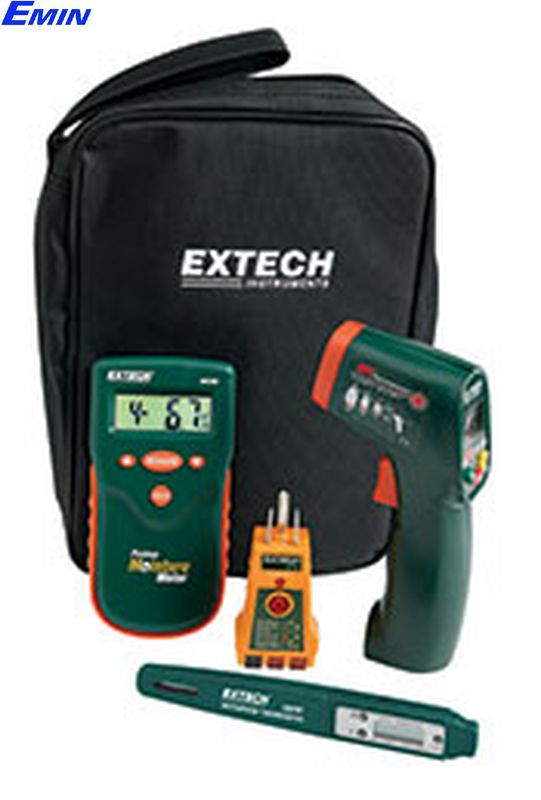
Why multifunction moisture measurement matters
Moisture can influence structural stability, storage life, processing consistency, and final product acceptance. In a building inspection workflow, excess moisture in screed or concrete may delay finishing work. In food and packaging applications, water activity can affect shelf life and microbial risk. In industrial gas or dry process systems, very low moisture levels may be critical for equipment protection and process performance.
A multifunction approach is valuable because not all moisture problems are measured in the same way. Some applications require direct assessment of material moisture, while others depend on water activity, dew point, or gravimetric analysis. Choosing the right measurement principle is often more important than simply choosing a meter with a wide numeric range.
Different measurement principles in this category
This category includes instruments built around several established methods. Handheld meters such as the PCE PMI 3 and PCE PMI 4 are suited to quick checks on construction materials including screed and concrete. These types of instruments are useful when site teams need fast screening before coating, flooring, or finishing work proceeds.
For water activity measurement, products such as the PCE-WAT 10 and PCE-WAM 10 are designed for sample-based analysis with controlled trays and temperature monitoring. This makes them relevant for applications where the interaction between moisture and product stability matters more than simple percentage moisture content.
There are also laboratory and process-focused analyzers in the range. The Anton Paar Brabender MT-CA supports oven-drying style moisture analysis for multiple samples, while the Anton Paar Brabender Aquatrac-V uses a selective chemical method for water determination. At the trace end of the spectrum, Shaw and Edgetech Instruments models address very low moisture levels through dew point or ppmv-based measurement.
Typical application areas
In construction and restoration, multifunction moisture meters help assess floors, walls, concrete, plaster, and wood-based materials. Instruments with preset material scales or relative modes make it easier to compare readings across different surfaces and identify areas that need further testing. If your focus is more specific to field crops or stored produce, it may also be worth reviewing our agricultural moisture meter range.
In food and ingredient handling, water activity meters are commonly used to support process checks, storage evaluation, and shelf-life studies. These instruments do not simply report how much water is present; they help indicate how available that water is within the product matrix. This distinction is often important when comparing powders, dried foods, or packaged samples.
Industrial users may require moisture analysis in gases, dry environments, or tightly controlled production conditions. In those cases, instruments such as the Shaw SDHmini-Ex-G-4-EU or the Edgetech Instruments PPM1 are more relevant than conventional building moisture meters, because they are designed for trace moisture and dew point-related applications rather than bulk material testing.
How to choose the right multifunction moisture meter
A practical starting point is the sample or material itself. Concrete, screed, wood, powders, liquids, packaged food, and process gas all require different measurement logic. If you need rapid non-destructive screening on site, a portable handheld meter is usually the better fit. If you need documented, repeatable results for production or laboratory workflows, a bench or analyzer-based system may be more appropriate.
The next factor is the parameter you actually need to control. Moisture content, water activity, and dew point are related, but they are not interchangeable. A product like the ATAGO PAL-Moisture, for example, is based on a refractometer-style approach for moisture content in suitable samples, while the PCE-WAT 10 is aimed at water activity measurement with stored records and temperature monitoring.
You should also consider operating conditions, data handling, and throughput. Some users need a compact battery-powered instrument for field use, while others need internal memory, PC connectivity, or the ability to run several samples in sequence. Where laboratory-style throughput matters, the Anton Paar range is relevant for users comparing more advanced moisture analysis workflows.
Examples from the current product range
PCE is prominently represented in this category with portable options for different measurement tasks. The PCE PMI 3 and PCE PMI 4 are oriented toward building materials, while the PCE-WAM 10 and PCE-WAT 10 focus on water activity measurement. This makes the brand a practical reference point for users who want both handheld inspection tools and sample-based instruments within one manufacturer ecosystem.
YATO offers a different angle with the YT-73138, combining detection functions with moisture testing for inspection work where locating hidden materials and checking condition may happen in the same workflow. ATAGO adds a compact moisture refractometer option for suitable sample types, while Shaw and Edgetech Instruments address demanding low-moisture applications in industrial environments.
For users who need a more process-oriented or laboratory-focused setup, Anton Paar analyzers broaden the category beyond handheld field meters. These instruments are better aligned with controlled test conditions, repeatability, and analytical workflows where moisture results influence production or quality release decisions.
When a multifunction meter is better than a single-purpose device
A single-purpose instrument can be ideal when the application is fixed and highly repetitive. However, many B2B users deal with mixed materials, changing job sites, or multiple quality checkpoints. In those situations, a multifunction meter reduces the need to maintain separate tools for each moisture-related task.
This is especially relevant for contractors, inspection teams, technical service providers, and QA departments that work across several product groups. A broader measurement capability can simplify training, reduce instrument switching, and make it easier to build a consistent testing routine. For very simple presence/absence checks in packaging or storage workflows, some users may also consider moisture detecting papers as a complementary option.
Key points to review before purchase
Before selecting a model, confirm the measurement principle, target material, and required reporting format. It is also worth checking whether the instrument is intended for spot checks, comparative screening, or formal analytical measurement. These differences have a direct impact on usability and on how confidently the results can be applied in production or inspection decisions.
- Match the instrument to the material or sample type.
- Check whether you need moisture content, water activity, dew point, or trace moisture.
- Consider portability, memory, and software requirements.
- Review sample throughput if the instrument will be used in a lab or production setting.
- Make sure the measuring range and resolution fit your actual operating conditions.
Conclusion
The right multifunction moisture meter depends on what you are measuring, how you need to measure it, and what decisions the data will support afterward. Within this category, you can find solutions for field inspection, building material assessment, water activity testing, laboratory analysis, and low-level industrial moisture monitoring.
By comparing measurement method, application fit, and workflow requirements rather than focusing on specifications alone, it becomes much easier to choose an instrument that delivers useful results in day-to-day work. For buyers evaluating multiple moisture control tasks across one operation, this category offers a practical starting point for narrowing down the most suitable solution.
-
-
-
-
-
-
-
-
-
-
-
-
-
-
-
-
-
-
-
-
-
-
-
-