


Table scale
Fast, repeatable weighing is a daily requirement in packing stations, incoming inspection, formulation, retail preparation, and light industrial processing. When the task calls for a compact footprint with stable performance on a workbench or counter, table scale models are often the most practical choice. This category brings together equipment designed for routine weighing where operators need clear readouts, straightforward operation, and a capacity range that fits bench-top work rather than floor-scale applications.
Within industrial and commercial environments, table scales are used for everything from checking small components to weighing boxed goods, food portions, and intermediate materials. The right model depends less on brand alone and more on the combination of weighing range, readability, platform size, display style, and how the scale fits into the actual workflow.
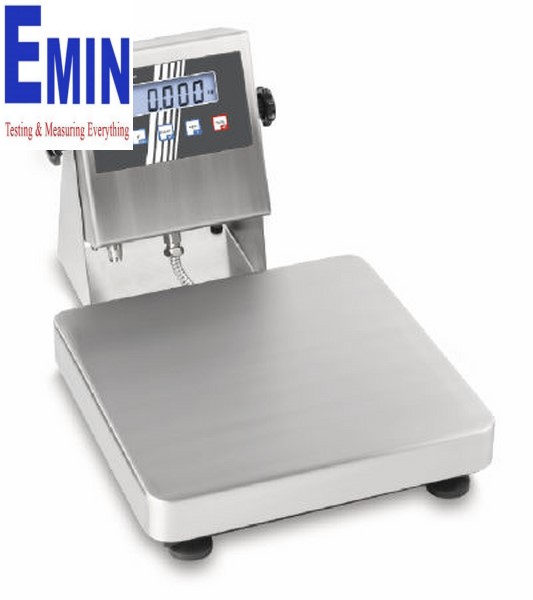
Where table scales fit in day-to-day operations
A bench or table scale sits between highly sensitive laboratory instruments and larger industrial platforms. It is typically chosen when users need a balance of capacity, readability, and ease of use for repetitive weighing tasks performed at a workstation. In production support areas, this can include portioning, check weighing, batching, or verifying shipped items before dispatch.
Compared with highly specialized instruments such as an precision scale, table scales are generally selected for more robust, practical bench use. They are also relevant in counting, stock handling, and simple process control, especially when the operator needs quick stabilization and a platform suitable for cartons, trays, or containers.
Common design types in this category
Not every table scale is built in exactly the same way. Some units integrate the display and platform into one compact body, while others use a separate indicator and weighing platform. This matters in real use: an integrated design can save space on a crowded bench, while a separate indicator can improve visibility when weighing larger items that might block the display.
Examples in this category illustrate that range well. The KERN FOB 3K1 Bench Scale is suited to lower-capacity bench work where portability and quick operation are useful, while the CAS DB-1H Digital Scale represents a heavier-duty format for larger loads on a bench-height station. There are also modular solutions such as the KERN KFP 3V20M Platform and the KERN KFS-TM Professional Display Device, which show how a weighing system can be configured around the needs of the workstation.
How to choose the right table scale
The first point to define is the required maximum load and readout. A scale selected too close to the normal working load may reduce flexibility, while a scale with too much capacity may offer less useful readability for smaller items. For example, low-capacity applications such as component handling or controlled dispensing may benefit from models like the KERN IFB 6K-4S High-resolution Scale, whereas broader bench weighing tasks may be better served by models in the 15 kg to 65 kg range.
Platform dimensions are just as important as capacity. A compact unit can be ideal for small samples, but boxed products, trays, or larger containers need enough weighing surface for stable loading. Stainless steel platforms, as seen on several KERN models such as the KXP and FKB series, are often preferred in environments where the weighing surface should be easy to clean and suitable for repeated industrial use.
It is also worth considering user interaction. Some operations need only simple zero and tare functions, while others benefit from visible status indicators or application-specific functions. If counting is part of the process, users may also want to review a dedicated counting scale category rather than relying on a general bench scale alone.
Representative products and application examples
Several products in this category help illustrate the practical spread of table-scale applications. The KERN FCF 30K-3 Bench Scale is a good example of a general-purpose bench unit for routine weighing in logistics or warehouse support. For users who need higher resolution at medium capacities, models such as the KERN FKB 15K0.5, KERN FKB 36K0.1, KERN FKB 36K0.2, and KERN FKB 65K0.2 show how bench scales can support more detailed measurements without moving into full laboratory equipment.
The CAS DB-1H Digital Scale is more aligned with robust day-to-day industrial weighing where a solid structure and simple operation are priorities. On the other hand, the KERN KXP 6V20LM and KERN KXP 15V20M stainless steel weighing plates highlight another common requirement: using a dedicated weighing platform as part of a broader system rather than choosing a fully self-contained device.
For buyers comparing manufacturers, this category includes well-known names such as KERN and CAS, alongside other scale brands available across the wider weighing portfolio. The best option usually comes down to the target capacity, environment, operating method, and whether a standalone or modular setup is preferred.
Materials, hygiene, and operating environment
In many B2B settings, the physical construction of the scale matters as much as measurement performance. Stainless steel weighing plates are often selected where cleanliness, wipe-down routines, or contact with packaged food and process materials are part of normal operation. A more robust housing and stable platform can also improve repeatability when scales are used continuously throughout a shift.
Ambient conditions should not be overlooked. Temperature range, power arrangement, and whether the unit runs from mains supply or rechargeable battery can all affect deployment. Portable bench scales are useful for mobile workstations or receiving areas, while fixed installations may prioritize larger displays, external indicators, and easier cable routing around the bench.
When a modular weighing setup makes sense
Some operations are better served by a weighing system built from separate components. A platform such as the KERN KFP 3V20M or KXP series can be paired with an indicator like the KERN KFS-TM Professional Display Device when the layout demands flexibility. This is often useful when the load is large enough to obscure an integrated display, or when the indicator needs to be mounted where the operator can read it more comfortably.
Modular systems can also simplify maintenance and future upgrades. Instead of replacing a complete scale, users may be able to adapt the setup by changing the platform, display device, or accessories around the workstation. If the application requires cables, interfaces, or add-on parts, it may also be useful to review available weighing accessories to complete the installation properly.
Choosing with your process in mind
A good table scale should support the way people actually work, not just meet a number on a specification sheet. Load size, container shape, cleaning routine, required display visibility, and frequency of use all influence whether a compact portable model, a high-resolution bench scale, or a platform-and-indicator combination will be the better long-term fit.
This category is intended to help buyers compare practical bench-top weighing solutions across different capacities and configurations. By matching the scale to the process, users can improve speed, reduce handling errors, and build a more reliable weighing point for everyday industrial or commercial use.
-
-
-
-
-
-
-
-
-
-
-
-
-
-
-
-
-
-
-
-
-
-
-
-