


Pocket Scale
When weighing needs to be fast, portable, and reasonably accurate, a compact scale is often the most practical choice. In labs, workshops, retail back rooms, field inspection work, and small-part handling, a Pocket Scale helps users verify mass without moving samples to a larger bench instrument.
This category brings together portable weighing devices designed for light-duty measurement where convenience, quick setup, and compact storage matter. While these instruments are small in size, they can still support a wide range of day-to-day weighing tasks, from fine gram-level checks to higher-capacity portable measurements depending on the model.
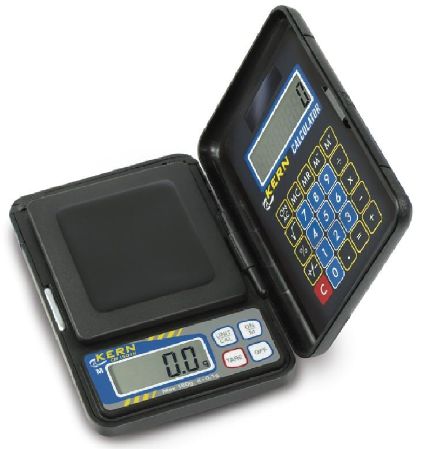
Where pocket scales fit in practical workflows
Pocket scales are commonly selected when users need a balance that can be carried easily, powered by batteries, and used in limited spaces. Typical applications include sample preparation, incoming goods checks, jewelry and carat-related weighing, educational use, and simple process verification for small components or packaged materials.
Compared with larger bench units, these scales are mainly valued for portability and quick availability. They are especially useful when weighing tasks are intermittent, when workstations change frequently, or when the operator needs a lightweight device for on-site use.
Typical product range in this category
The pocket scale segment covers several practical formats. Some models are tuned for fine readability at low capacity, while others are better suited to higher-capacity general weighing. This means the right choice depends less on size alone and more on how much resolution is needed for the materials being handled.
For example, the KERN TGD 50-3CS05 Compact Pocket Carat Balance and KERN TGD 50-3C Compact pocket carat balance are suited to small-load measurement where milligram-level readability is important. For more general portable use, models such as the KERN TGC 150-2S05 Slim Pocket Balance, KERN TGC 150-2 Pocket balance, or CAS SH(200g) Smart Weighing Scale offer a different balance between capacity and readability. Users looking for a broader portable range may also consider units such as the OHAUS CL5000T Technical pocket scales or DaiHan WBA-620A Pocket Balance.
How to choose the right pocket scale
The first factor is capacity versus readability. A scale with very fine resolution usually supports a lower maximum load, while a higher-capacity portable scale may offer coarser increments. In practice, buyers should start with the smallest increment that still makes sense for the material being weighed, then confirm that the full load stays comfortably within the instrument range.
Power supply and operating environment also matter. Many pocket scales use AAA or coin-cell batteries, making them suitable for mobile work, but users should still consider expected runtime, temperature conditions, and how often the unit will be transported. Protective covers, compact housings, and simple tare functions can be just as important as the weighing specification itself in everyday use.
If the process requires tighter laboratory performance, it may be more appropriate to move to a precision scale or even an analytical balance category depending on the application.
Differences between general-purpose and fine-resolution models
Not all portable balances are intended for the same level of measurement control. A compact carat balance, for instance, is generally chosen for smaller samples and finer readout, while a higher-capacity technical pocket scale is better suited to routine checks where speed and portability are more important than ultra-fine resolution.
Within this category, KERN offers several examples of fine portable weighing formats, while CAS and OHAUS appear in more general compact weighing applications. DaiHan also provides portable options that can fit light lab or service-related use. Buyers comparing brands may want to review the broader KERN product range or explore the CAS brand page when standardizing equipment across multiple sites.
Key considerations for reliable day-to-day use
Even for portable equipment, correct operation has a direct impact on measurement quality. A stable surface, proper taring, suitable calibration practice, and avoiding overload are basic but important steps. Pocket scales are convenient, but they still perform best when protected from vibration, drafts, contamination, and unnecessary mechanical shock.
Users should also pay attention to the weighing units required by the workflow. Depending on the model, common units may include g, oz, ct, dwt, ozt, and related formats. This is helpful in businesses that deal with different material types or need to switch between metric and trade-specific units during routine work.
When a pocket scale is not enough
Portable scales are ideal for quick checks and small-item measurement, but some tasks call for more specialized instruments. If the application involves sample composition changes during heating, a dedicated moisture analyzer is more suitable than a standard compact scale.
Likewise, if the workflow focuses on quantity verification rather than simple mass measurement, a counting-oriented system may improve speed and consistency. In cases where accessories such as calibration-related items or protective additions are needed, the available range of weighing accessories can help complete the setup.
Suitable users and buying scenarios
This category is relevant for laboratories, educational departments, service teams, jewelers, light production environments, quality control stations, and distribution operations that handle small items. Pocket scales are often chosen as secondary instruments as well, supporting spot checks alongside larger bench scales in the same facility.
They are also practical for organizations that need multiple low-footprint units across different work areas. Instead of dedicating one large instrument to every station, a compact portable solution can improve flexibility while keeping routine weighing close to the point of use.
Choosing with confidence
A well-selected pocket scale should match the real weighing task, not just the smallest body size or the finest display increment. Capacity, readability, portability, units, power source, and operating conditions all affect whether the instrument will be practical in everyday work.
By comparing compact models from brands such as KERN, CAS, OHAUS, and DaiHan, buyers can identify a portable weighing solution that fits both technical requirements and workflow realities. If your application grows beyond basic portable measurement, this category also provides a useful starting point for moving into more specialized weighing equipment within the broader scale ecosystem.
-
-
-
-
-
-
-
-
-
-
-
-
-
-
-
-
-
-
-
-
-
-
-
-