


Counting Scale
Fast and accurate piece counting helps reduce manual errors in packing, inventory control, kitting, and small-parts handling. In many workshops, warehouses, and production environments, a Counting Scale is not just a weighing device; it is a practical tool for improving consistency when the same parts need to be counted repeatedly by weight.
This category focuses on counting scales used for industrial and commercial applications where operators need reliable quantity estimation, stable readings, and straightforward operation. Whether the task involves screws, connectors, components, or packaged items, the right scale can support faster workflows and better stock accuracy.
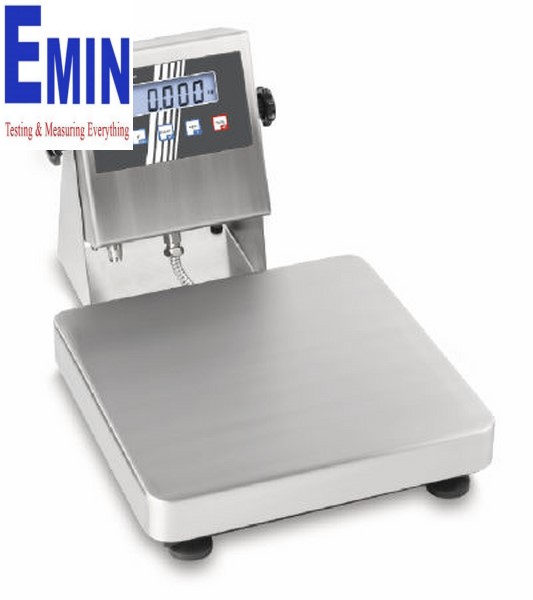
Where counting scales are commonly used
Counting scales are widely used in assembly lines, spare-parts storage, electronics handling, logistics preparation, and incoming or outgoing goods control. Instead of counting each item manually, the scale calculates quantity based on the reference weight of a single piece and the total measured load.
This approach is especially useful when large volumes of identical items must be processed quickly. For applications that require finer measurement performance for small samples or lightweight parts, users may also compare options in the precision scale range before selecting the best fit.
What to look for when choosing a counting scale
The first selection point is the relationship between capacity and readability. A higher maximum load is helpful for bulk counting, but it should still offer enough resolution for the individual piece weight involved. In practical terms, the correct choice depends on whether you count very light components in small batches or heavier items in larger quantities.
Stabilization time, repeatability, and interface options also matter in daily use. Models in this category include examples with RS-232 communication, battery operation, and backlit displays, which can be important for bench use, mobile workstations, or data transfer to external systems. If calibration, pans, adapters, or related setup items are part of your workflow, it can also be useful to review weighing accessories.
Typical product options in this category
The available range covers compact bench models through to larger platform-based units. For example, the KERN CPE 6K-3 Counting Scale is suited to lower-capacity applications where finer resolution is important, while the KERN CPE 30K-3 Counting scale supports higher-capacity counting tasks with a 30 kg maximum load.
For users needing robust everyday operation, the KERN CIB 6K-4 Robust Counting Scale is positioned as a durable bench option. In broader-capacity workflows, models such as the PCE SCS 30 Counting Scale and PCE SCS 150 Counting Scale illustrate how counting scales can support both medium and heavier load ranges, depending on the parts being handled.
Manufacturer landscape and product families
This category includes strong representation from KERN, PCE, and Excell, with product examples covering different capacities, readabilities, and bench formats. KERN models in particular appear across several practical use cases, from compact counting tasks to higher-capacity bench counting.
PCE models add options for users who need larger platforms, rechargeable operation, or communication interfaces in more demanding environments. Excell ALH4(H) series examples provide another route for routine counting applications where a simple display layout and RS232 connectivity are useful for process integration.
Bench scales versus larger platform counting scales
A compact bench counting scale is often the right choice for electronics, hardware stores, laboratories, and assembly tables where the parts are relatively small and the working area is limited. Products such as the Excell ALH4(H)-15kg + RS232 Counting Balance or PCE TB 6 Counting Scale fit this style of application well, especially when mobility and quick setup are priorities.
Larger platform styles are more suitable when cartons, bins, or heavier batches need to be counted directly on the weighing surface. Units such as the PCE SCS 60 or PCE SCS 150 are better aligned with warehouse, stockroom, and industrial dispatch tasks where larger footprints and higher capacities are needed.
Why connectivity and operating conditions matter
In many B2B environments, the scale is part of a wider process rather than a standalone instrument. That is why features such as RS-232 communication, rechargeable battery support, backlit displays, and memory functions can be important. These features help operators transfer data, work in variable lighting, and use the scale away from a fixed power source when necessary.
Ambient temperature range, warm-up time, and general housing size should also be considered before purchase. A model used in a clean bench environment may not need the same physical format as one used near packing areas or dispatch stations, so the installation context should guide the final selection.
How counting scales fit into a broader weighing workflow
Piece counting is often only one step in a wider quality or inventory process. Some users also need detailed mass verification, analytical-level measurement, or moisture-related material checks depending on the product type. In those cases, it may be helpful to review related categories such as analyzer scale solutions for more specialized weighing tasks.
The best setup usually comes from matching the scale to the actual part size, target batch quantity, available workspace, and required data handling method. A counting scale performs most effectively when the sample weight is stable, the reference piece is appropriate, and the operating range matches the intended production or stock-control task.
Choosing the right model for your application
For lighter components and finer counting work, lower-capacity models with better readability are generally the more practical option. For bulk items, cartons, or warehouse counting, a larger platform and higher maximum capacity often deliver better efficiency. Reviewing actual use conditions is more useful than choosing only by maximum load.
This Counting Scale category brings together models for different counting scenarios, from compact bench units to higher-capacity industrial platforms. By comparing capacity, resolution, interface options, and working format, buyers can narrow down the most suitable scale for reliable piece counting and smoother day-to-day operations.
-
-
-
-
-
-
-
-
-
-
-
-
-
-
-
-
-
-
-
-
-
-
-
-