


Resistors, capacitors, standard inductors
Stable reference components are essential whenever a calibration workflow depends on known electrical values rather than estimated behavior in a live circuit. In practical labs, service environments, and production support, engineers often need reliable resistor, capacitor, and inductor standards to verify instruments, compare readings, or build controlled test setups with predictable impedance characteristics.
Resistors, capacitors, standard inductors in this category support that need by giving buyers access to component-based reference hardware used in calibration, validation, and electronics test environments. This type of category is especially relevant when working alongside broader calibration platforms, including multifunction calibrators, where known passive values help confirm measurement paths and instrument response.
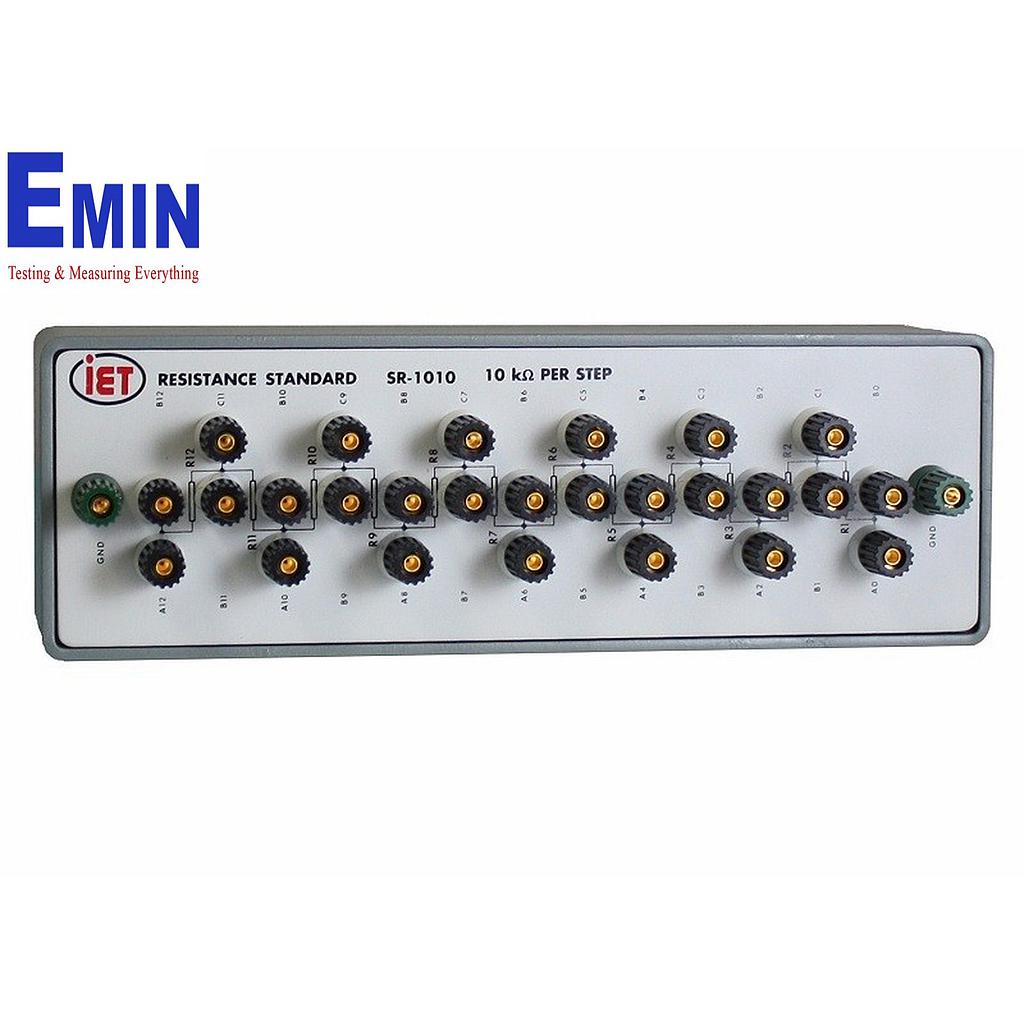
Where standard passive components fit in calibration work
Unlike active instruments that generate or measure a wide range of signals, passive standards are used to present a known electrical condition to the device under test. A resistor standard helps check resistance measurement accuracy, a capacitor standard supports capacitance verification and AC behavior checks, and a standard inductor is useful when evaluating inductance measurement, impedance response, or circuit behavior at defined test frequencies.
These components are commonly used in electronics maintenance, instrument verification benches, educational labs, and R&D environments. They can also complement workflows that include temperature calibrators or other specialist calibration tools, especially in facilities that manage different test disciplines under one quality system.
Why standard inductors matter in this category
Although the category covers resistors, capacitors, and inductors, the current featured range highlights many inductive products. That makes sense in applications where buyers need controlled inductance values for RF, power, filtering, or comparison testing. Standard inductors can be useful for checking LCR meters, validating fixture behavior, or assembling repeatable prototype and verification setups.
Inductors are not all selected the same way. Their practical usefulness depends on factors such as inductance value, tolerance, DC resistance, current handling, mounting style, and the frequency at which performance is characterized. For that reason, engineers usually choose an inductor standard based on the real test method rather than inductance alone.
Typical product styles available
The range shown here includes several common inductor constructions from Bourns, covering both surface-mount and through-hole formats. This is helpful for buyers who need reference components aligned with their PCB design, fixture layout, or legacy test hardware.
Examples include compact chip and surface-mount parts such as the Bourns SDR0604150YL Inductor Surface Mount and Bourns CW2012A-56NJ Inductor Surface Mount, which suit dense assemblies and modern board-level evaluation. For applications that need more traditional leaded installation or easier bench handling, through-hole options like the Bourns 74F826AP-RC RF Choke Wirewound 8.2uH and Bourns 9310-10-RC RF Choke Molded Wirewound 820nH can be more practical.
The category also includes power-oriented and high-current styles. For instance, the Bourns SPB0705-R12M Inductor Surface Mount is listed with a relatively high rated current, while the Bourns 2207-V-RC Inductor High Current Toroid 33uH represents a toroidal approach that may be relevant in power conversion and choke applications where current capability and low resistance are important considerations.
Key selection criteria for engineers and buyers
The most effective way to choose from this category is to start with the measurement or circuit condition you need to reproduce. A purchasing decision is usually driven by a combination of inductance value, tolerance, mechanical format, and how the part behaves under the intended test frequency or current load.
For lower-profile SMT designs, parts such as the Bourns PM1008S-100M Inductor Chip Shielded Wirewound 10uH or Bourns PM628S-470-RC Inductor Power Shielded Bobbin Core 47uH may fit compact fixtures or production boards. If the application is more focused on power handling, models like the Bourns PM125S-820M-RC Inductor Power Shielded Bobbin Core 82uH, Bourns PM1608-6R8M Inductor Power Bobbin Core 6.8uH, or Bourns PM1608-681M Inductor Power Bobbin Core 680uH illustrate how the category spans very different current and resistance profiles.
Buyers should also pay attention to mounting type, because handling convenience and parasitic behavior often differ between through-hole and surface-mount parts. In test and calibration contexts, mechanical repeatability, lead length, and fixture compatibility can influence measurement consistency just as much as the nominal component value.
Understanding electrical trade-offs in real use
A standard inductor is only useful when its real-world behavior matches the purpose of the test. Two components with similar nominal inductance can behave differently because of tolerance, Q factor, DC resistance, shielding, or self-resonant frequency. That is particularly important in RF and switching applications, where frequency-dependent behavior changes what the instrument or circuit actually sees.
For example, an RF choke such as the Bourns 74F826AP-RC or Bourns 9310-10-RC may be more relevant for high-frequency comparison work than a larger power bobbin style. By contrast, a part such as the Bourns SDR1005-6R8M Wirewound or Bourns PM1608 series may be more suitable when current capability, ferrite construction, or compact power filtering behavior is closer to the application being evaluated.
This is why engineers often define the target condition first: resistance to current flow, frequency of test, acceptable tolerance, and installation method. Once those factors are clear, choosing the right reference component becomes much more straightforward.
How this category supports broader test ecosystems
In many organizations, passive standards are not purchased in isolation. They are part of a broader verification workflow that may involve handheld test gear, bench instruments, or dedicated calibration equipment. A known resistor, capacitor, or inductor can serve as a simple but effective reference point before moving on to more advanced diagnostics.
That broader context matters for procurement teams as well. A lab supporting electrical, thermal, and process instrumentation may source passive standards alongside tools such as pressure calibrators or other specialist devices. Even when the measurement domains are different, the purchasing logic is similar: stable reference conditions, repeatable procedures, and traceable maintenance practices.
Who typically buys these products
This category is relevant to calibration labs, electronics manufacturers, maintenance departments, design engineers, and educational institutions. Some buyers need a small quantity of representative parts for troubleshooting and fixture setup, while others require a repeatable component family for production test or ongoing validation work.
It can also be useful for teams working with component evaluation, EMC-related circuit behavior, or instrument cross-checking. In those cases, passive parts are selected less as commodity components and more as reference elements within a defined test method.
Choosing with confidence
When reviewing this category, it helps to think beyond the nominal value printed in the part description. The right selection depends on whether you need a compact SMT device, a through-hole part for easier fixture integration, an RF-oriented choke, or a higher-current inductor for power-related test conditions. Looking at tolerance, current rating, resistance, and operating context together will usually lead to a better fit than choosing by inductance alone.
For buyers comparing options across resistor, capacitor, and inductor standards, the goal is the same: create a known and repeatable electrical condition that supports reliable measurement. With a range that includes compact chip inductors, wirewound parts, RF chokes, and power inductors, this category provides practical building blocks for calibration, validation, and controlled electronics testing.
Types of Resistors, capacitors, standard inductors (2,388,522)
-
-
-
-
-
-
-
-
-
-
-
-
-
-
-
-
-
-
-
-
-
-
-
-