


Radiation Meter Calibration Equipment
Accurate radiation measurement depends not only on the detector itself, but also on the quality of the reference field used to verify and adjust it. In laboratories, metrology centers, nuclear facilities, and radiation safety programs, reliable Radiation Meter Calibration Equipment helps maintain traceability, supports compliance workflows, and improves confidence in dose and dose-rate readings across a wide operating range.
This category brings together systems designed for the calibration and verification of radiation monitoring instruments under controlled conditions. It is especially relevant for organizations working with personal dosimeters, ambient dose equivalent meters, neutron instruments, and other radiation measurement devices that require repeatable exposure geometry, known field characteristics, and stable positioning.
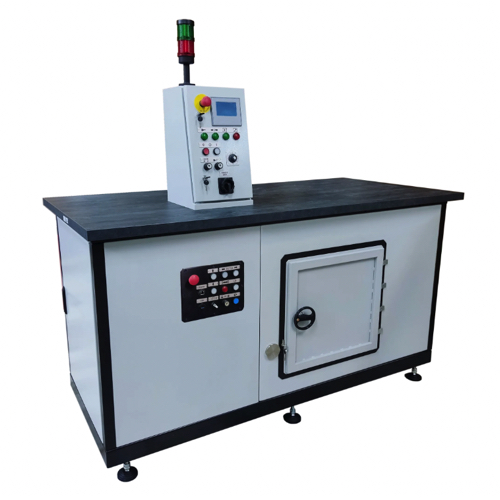
Designed for controlled and repeatable calibration work
Radiation calibration systems are built to reproduce reference radiation fields with known characteristics so that instruments can be tested, adjusted, or verified with a defined level of uncertainty. Compared with simpler check sources or basic field verification methods, these systems are intended for more structured calibration tasks where repeatability, positioning accuracy, shielding, and source handling are critical.
Depending on the application, the equipment in this category may support gamma or neutron calibration workflows. That makes the range suitable for facilities that need to evaluate instrument response across low to high dose-rate conditions, different source configurations, or specific measurement quantities such as ambient dose equivalent rate, personal dose equivalent rate, or air kerma rate.
Typical equipment scope in this category
The portfolio here includes both automatic irradiation calibration systems and self-contained irradiators intended for radiation instrument calibration. For gamma applications, examples include the Radmetron PM9100 and РМ9101 systems, which are designed for controlled irradiation and positioning across a broad working distance. For compact high-range gamma calibration tasks, the Radmetron PM9300 provides a self-contained configuration with controlled exposure conditions.
For neutron-related work, the category also includes systems such as the Radmetron РМ9200, РМ9201, and РМ9200H. These are intended for reproducing neutron fields for detector and meter calibration, helping laboratories address applications where gamma-only calibration equipment would not be sufficient. If you want to see the broader product range from the same manufacturer, you can also explore Radmetron calibration solutions.
Where radiation meter calibration equipment is commonly used
These systems are typically selected by organizations that need a structured calibration environment rather than occasional functional checks. Common use cases include metrology laboratories, radiation protection departments, nuclear research institutes, industrial radiography support teams, isotope handling environments, and service providers responsible for maintaining radiation monitoring fleets.
In practice, calibration equipment may be used to confirm meter response, compare instruments against a reference setup, support periodic recalibration programs, or validate detector behavior over different exposure levels. For teams managing broader calibration activities across multiple measurement domains, related categories such as multifunction calibrators and pressure calibrators may also be relevant for other instruments within the same maintenance system.
Key selection factors before choosing a system
The right choice depends on the type of radiation field you need to reproduce, the operating range required, and the class of instruments being calibrated. A gamma calibration setup for dose-rate meters will often be chosen based on source capacity, available dose-rate range, working distance, field accuracy, and positioning control. For neutron applications, users usually focus on source type compatibility, neutron flux density range, and the specific measurement quantities used in their procedures.
Another important factor is calibration workflow efficiency. In higher-throughput environments, automated motion control, repeatable source positioning, and stable operating geometry can reduce setup time and improve consistency between calibration runs. Mechanical limits such as allowable instrument load, table design, and spatial footprint also matter, especially in laboratories with strict layout or shielding constraints.
Gamma and neutron calibration: different needs, different system logic
Although both fall under radiation instrument calibration, gamma and neutron systems serve different technical purposes. Gamma calibration equipment is often used for dosimeters, survey meters, and dose-rate instruments that require reference exposure in terms of air kerma, exposure rate, or dose equivalent. Systems such as the PM9100, РМ9101, and PM9300 illustrate how controlled source handling and defined geometry support this kind of work.
Neutron calibration systems are more specialized because neutron field reproduction introduces different source, shielding, and response considerations. Equipment such as the РМ9200 series is intended for facilities that must verify neutron-sensitive instruments under repeatable field conditions. When both neutron and gamma instruments are managed within the same quality framework, it is often useful to review the wider range of radiation meter calibration equipment alongside other lab calibration assets.
Examples from the Radmetron range
Radmetron is the featured manufacturer in this category, with systems covering both automatic irradiation calibration and neutron calibration applications. The PM9100 is suited to applications that require a wide gamma dose-rate span, while the РМ9101 supports lower-range gamma calibration needs with controlled positioning and repeatable setup. These systems are relevant where users need structured reference fields for routine laboratory calibration or verification.
On the neutron side, the РМ9200 and РМ9201 provide calibration capability for neutron fields with different source configurations, while the РМ9200H offers another neutron irradiation calibration option for facilities with more specific operating requirements. For compact gamma irradiation tasks in a self-contained format, the PM9300 extends the category with a different system architecture focused on controlled exposure and shielding integration.
How this category fits into a broader calibration program
Radiation instrument calibration is often one part of a larger quality assurance structure that may also include electrical, temperature, or process calibration tasks. While the technical principles differ, the purchasing logic is similar: users need equipment that matches their measurement range, uncertainty targets, workflow, and traceability requirements. That is why some buyers also compare nearby categories such as temperature calibrators when building out a full calibration lab.
Within radiation-specific environments, the priority is usually to align the calibration system with the actual instruments in service and the procedures that govern them. That includes reviewing detector type, required quantity, usable field range, positioning accuracy, and the practical conditions under which the calibration will be performed.
Choosing the right solution for your application
If your work involves routine verification of survey meters, personal dose instruments, neutron detectors, or other radiation monitoring devices, selecting the appropriate calibration platform can have a direct impact on consistency and audit readiness. A suitable system should support the radiation type you work with, the operating range your instruments require, and the level of control expected in your calibration process.
This category is intended to help technical buyers compare those options more efficiently, from automatic gamma irradiation systems to neutron calibration solutions and self-contained irradiators. By focusing on application needs rather than only headline specifications, it becomes easier to identify equipment that fits both the measurement task and the operational environment.
-
-
-
-
-
-
-
-
-
-
-
-
-
-
-
-
-
-
-
-
-
-
-
-