


Pipette Calibration
Accurate liquid handling is critical in laboratories, pharmaceutical production, biotechnology workflows, and quality control environments. When pipettes drift out of tolerance, even small volume errors can affect test results, validation work, and process consistency. A well-planned Pipette Calibration setup helps verify dispensing performance, improve traceability, and support routine compliance in demanding applications.
Why pipette calibration matters in daily laboratory work
Pipettes are used in tasks where repeatability and volume accuracy directly influence outcomes, from sample preparation to analytical procedures. Over time, wear, environmental changes, and intensive use can affect dosing performance, making regular verification an important part of laboratory quality practice.
Calibration equipment for pipettes is designed to support gravimetric testing, controlled working conditions, and more reliable evaluation of single-channel or multichannel instruments. For organizations that also manage wider calibration tasks, related equipment such as multifunction calibrators may be useful elsewhere in the metrology workflow, but pipette applications require a more specific setup focused on liquid dispensing accuracy.
What this category typically supports
This category focuses on systems and equipment used to calibrate pipettes through controlled measurement processes. In practice, that can include complete workstations, balances or automatic devices dedicated to pipette testing, environmental monitoring probes, software-assisted workflows, and accessories that help maintain stable conditions during measurement.
The goal is not only to take a reading, but to build a repeatable calibration process. That often means combining weighing performance, vibration control, temperature-related inputs, and data handling in a way that fits routine lab operation. For facilities with broader instrument control programs, specialized categories like temperature calibrators can complement environmental verification activities around the lab.
Representative RADWAG solutions in this range
RADWAG is the featured manufacturer in this category, with solutions ranging from complete calibration workstations to automated systems for multichannel pipettes. These products are especially relevant for laboratories that want to move beyond manual checks and build a more structured, software-supported calibration workflow.
The RADWAG SDKP Workstation for Pipettes Calibration is available in 1-station and 2-station formats, making it suitable for different throughput needs. These workstations are configured around the practical requirements of the calibration bench, including anti-vibration support, probes for temperature, humidity, pressure, and water temperature measurement, a sink for used water, and a PC environment with pre-installed software.
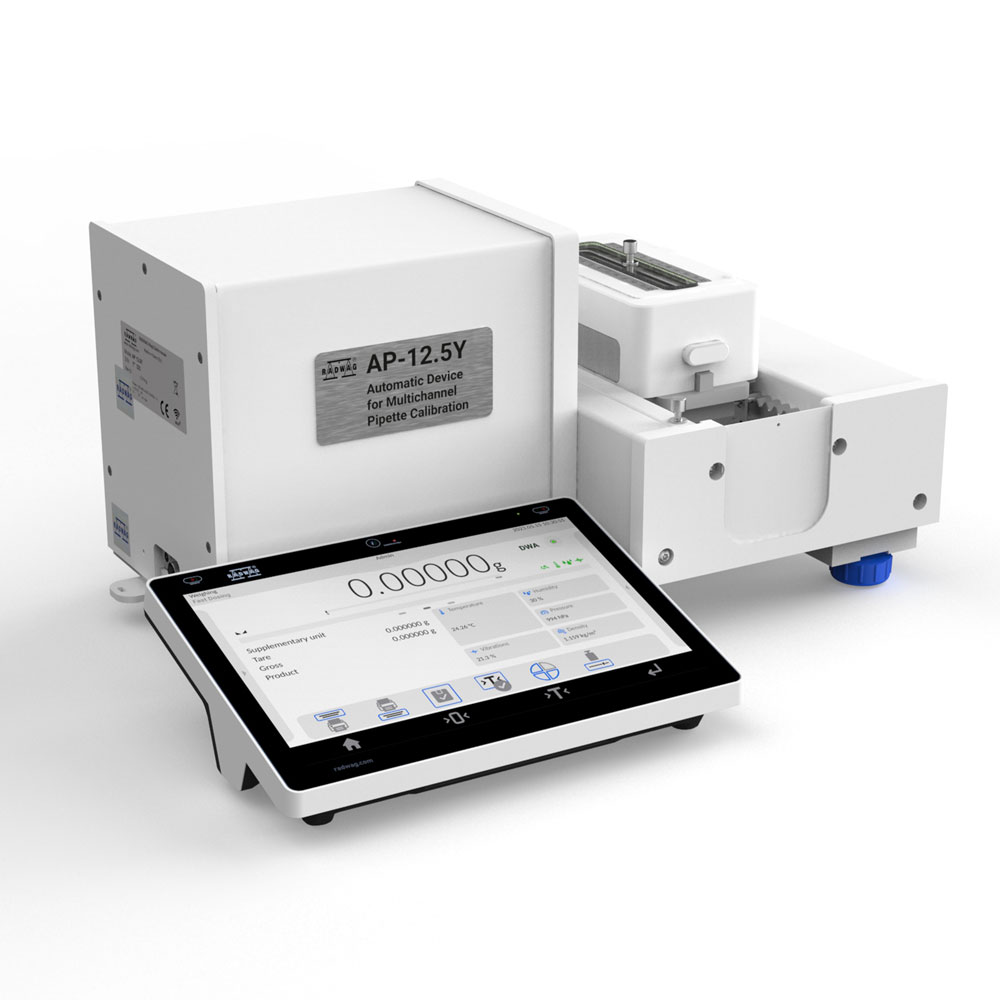
For higher-efficiency testing of multichannel pipettes, the RADWAG AP-12.5Y and AP-12.1.5Y automatic devices provide a more advanced approach. They are designed for automated gravimetric measurement with fine readability, touchscreen operation, and modern communication interfaces, helping laboratories streamline test cycles and reduce operator dependency in repetitive calibration routines.
Manual workstation or automatic system: how to choose
The right solution depends largely on your workflow volume, pipette types, and documentation needs. A workstation-based setup is often a practical choice for labs that perform scheduled calibration at moderate frequency, need a dedicated ergonomic station, or want a defined environment for routine checks and operator-guided procedures.
An automatic calibration system becomes more attractive when multichannel pipettes are common, when throughput matters, or when the goal is to shorten testing time while maintaining consistency. Automated devices can also help standardize procedure execution across teams, which is valuable in regulated or highly quality-driven environments.
If your organization calibrates multiple instrument types, it can be useful to separate needs by physical quantity. For example, pressure-related verification tasks are better served by a dedicated pressure calibrator, while pipette calibration remains focused on volumetric performance through gravimetric methods.
Key factors to evaluate before buying
Start with the type of pipettes you need to verify: single-channel or multichannel, fixed volume or variable volume, and the maximum volume range used in your lab. This affects the required weighing performance, expected measurement time, and whether an automated platform will bring meaningful productivity benefits.
Next, consider the working environment. Pipette calibration is sensitive to factors such as vibration, ambient conditions, and water temperature, so a stable installation and proper measurement support are important. Systems that integrate environmental probes, anti-vibration tables, and software can reduce setup variability and make procedures easier to document.
It is also worth checking connectivity, operator interface, and how results are managed internally. Features such as touchscreen displays, PC-based software, Ethernet or Wi-Fi connectivity, and organized workstation layouts can make a noticeable difference in day-to-day usability, especially where calibration records must be reviewed or retained.
Where these systems are commonly used
Pipette calibration equipment is commonly selected by testing laboratories, pharmaceutical and life science facilities, research institutions, universities, and industrial quality departments. In these settings, calibration supports confidence in sample handling, method reproducibility, and internal quality procedures.
It is also relevant in service environments that manage pipette verification for multiple users or departments. A two-station workstation can support parallel activity, while an automatic multichannel system may be better suited to repetitive testing programs with higher sample loads and tighter turnaround expectations.
Building a more reliable calibration workflow
Choosing the right equipment is only one part of the process. A reliable setup usually combines the physical station, suitable measurement capability, environmental awareness, and clear operating procedures. When these elements are aligned, calibration becomes easier to repeat and easier to audit internally.
Within this category, the available RADWAG solutions illustrate different ways to structure that workflow, from dedicated bench-based workstations to automated devices for multichannel pipette testing. The best fit depends on whether your priority is flexibility, operator-guided routine work, or faster and more standardized execution.
For teams looking to improve volumetric verification in the lab, this category provides a focused starting point for comparing workstations, automatic devices, and the supporting tools needed for a stable, well-documented pipette calibration process.
-
-
-
-
-
-
-
-
-
-
-
-
-
-
-
-
-
-
-
-
-
-
-
-