


Blood Pressure Calibrator
Accurate verification of blood pressure devices is essential in hospitals, clinics, biomedical service departments, and medical equipment maintenance workflows. When a sphygmomanometer or blood pressure monitor drifts out of tolerance, it can affect routine checks, preventive maintenance, and confidence in measured values. This is where Blood Pressure Calibrator equipment plays an important role, helping technicians simulate and measure pressure conditions in a controlled way.
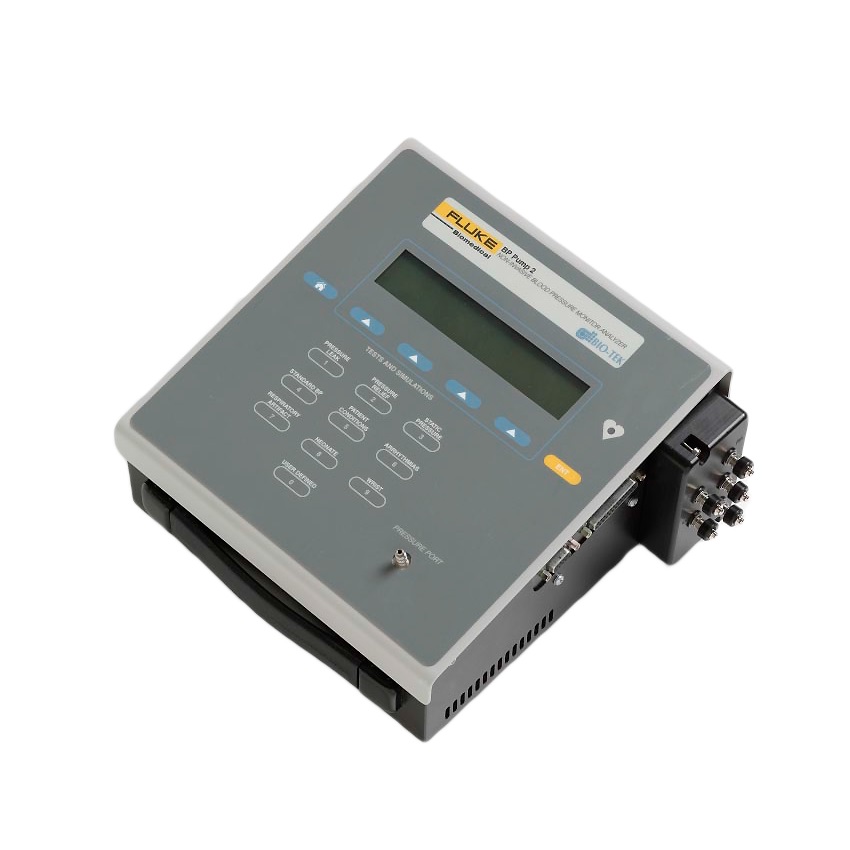
Why blood pressure calibration equipment matters
Blood pressure measurement remains one of the most common diagnostic procedures in healthcare. Because of that, testing the performance of sphygmomanometers is not just a technical task; it supports consistent maintenance practice and helps confirm whether a device is operating within expected limits.
A dedicated calibrator is designed to generate and measure pressure with suitable resolution and repeatability for this application. Compared with general-purpose tools, a unit built specifically for blood pressure instruments can simplify routine inspection, troubleshooting, and periodic verification.
Typical applications in service and maintenance environments
These instruments are commonly used by biomedical engineers, calibration labs, hospital maintenance teams, and distributors supporting medical devices in the field. They are suitable for checking manual sphygmomanometers and, depending on the calibrator type, for simulating test conditions relevant to non-invasive blood pressure equipment.
In many workflows, the goal is to confirm pressure generation, compare readings against a reference, and assess repeatability across multiple test points. If your calibration scope extends beyond blood pressure devices, it may also be useful to review broader solutions such as pressure calibrator equipment for related pressure verification tasks.
What to look for in a blood pressure calibrator
Selection usually starts with the required pressure range, display format, and target device type. For blood pressure applications, users often need support for kPa and mmHg, clear resolution, stable pressure control, and a layout that is easy to use on a bench or during field service.
Another practical consideration is whether the instrument is intended mainly for pressure generation and measurement, or whether it also supports simulated physiological conditions such as pulse or adult and newborn test ranges. Battery operation, display readability, and straightforward manual calibration procedures can also improve day-to-day usability.
For teams that maintain multiple instrument types, a wider calibration setup may include multifunction calibrators for electrical and process signals alongside specialized medical testing tools.
Representative models from HUAXIN
Within this category, HUAXIN provides dedicated models for sphygmomanometer testing. The HUAXIN ME01 is positioned for core pressure calibration tasks, with support for air as the working media, dual-line LCD display, and simultaneous indication in kPa and mmHg. Its integrated pressure transducer design and rechargeable battery format make it relevant for portable or bench use where straightforward handling is important.
For applications requiring a broader operating range and more advanced simulation capability, the HUAXIN ME02 offers extended pressure coverage and functions suited to adult and newborn testing scenarios. It also includes heart rate and pulse-related simulation parameters, which can be useful in service environments where technicians need a more complete verification workflow for blood pressure devices.
Understanding the difference between ME01 and ME02
The choice between these two models depends mainly on application scope. The HUAXIN ME01 fits users who need a focused sphygmomanometer calibrator for pressure generation and measurement within a standard blood pressure range, with compact dimensions and clear dual-unit display.
The HUAXIN ME02 is better suited when the maintenance process calls for a wider pressure range, additional simulation capability, or broader test coverage for different patient profiles. In practice, service teams should match the instrument to their routine workload rather than selecting only by maximum range.
How to choose the right model for your workflow
If your main task is periodic verification of conventional blood pressure measuring devices, a simpler platform may be the more efficient option. It can reduce setup time and provide the essential measurement functions needed for repeatable checks. On the other hand, workshops handling more diverse service cases may benefit from a calibrator with extended simulation features and a wider operating envelope.
It is also worth considering the surrounding calibration ecosystem. Some organizations maintain pressure, temperature, and medical instruments under one program, so they may combine blood pressure calibration tools with temperature calibrators and other specialized test equipment depending on the service scope.
Practical benefits for technical teams
A well-matched blood pressure calibrator can support more consistent maintenance procedures, clearer test documentation, and easier comparison between device readings and reference values. This is especially important when equipment is checked regularly across multiple departments or customer sites.
From a purchasing perspective, the category is most relevant for B2B buyers who need dependable tools for medical equipment servicing, inspection, or calibration programs. Instead of treating all models as interchangeable, it is better to compare them based on working range, simulation needs, display convenience, and how they fit into existing test routines.
Conclusion
Choosing the right blood pressure calibration equipment starts with understanding the devices you service and the level of verification your workflow requires. Whether you need a compact instrument for routine sphygmomanometer checks or a model with broader simulation capability, this category focuses on tools built for accurate and practical blood pressure testing.
By reviewing the available HUAXIN models in context of pressure range, usability, and application scope, buyers can narrow down the most suitable option for maintenance, biomedical engineering, or calibration lab use.
-
-
-
-
-
-
-
-
-
-
-
-
-
-
-
-
-
-
-
-
-
-
-
-