


存储/转运箱
Keeping small tools, samples, and lab accessories organized is a practical requirement in many technical environments. When items need to be protected, moved between workstations, or separated for cleaner handling, Storage/Transfer Boxes help create a more reliable workflow without adding unnecessary complexity.
In lab, inspection, assembly, and general industrial support areas, these boxes are often used to reduce mix-ups, improve handling efficiency, and protect parts during temporary storage or internal transport. The category includes compact tool and parts boxes, drawer-style organizers, and anti-static trays suited to different bench and storage setups.
Where storage and transfer boxes fit in day-to-day operations
These products are typically selected for tasks where items need to stay grouped, accessible, and easier to move. That may include organizing consumables at a lab bench, separating small components in a production support area, or keeping frequently used tools in a protected container.
Compared with open handling, a dedicated box or tray can improve visibility and reduce accidental loss of small items. In workflows that also rely on supporting consumables such as bags for packaging or temporary containment, boxes provide a more structured option for repeated use and internal circulation.
Main product types in this category
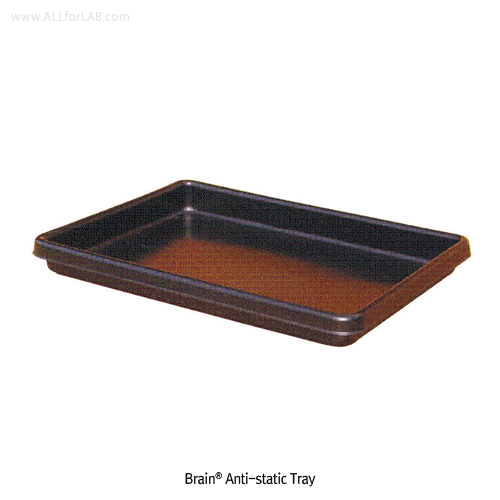
This category covers several practical formats rather than one single box style. Tool and parts boxes are suited to general storage and transport of small items, while drawer boxes help users maintain fixed organization on shelves or worktables. Anti-static trays serve a different role by supporting safer handling for components that may be sensitive to electrostatic discharge.
Examples from the current range include Brain B3.202C, B3.203C, and B3.204C box cases in different sizes, as well as National N2.NTB201 through N2.NTB204 tool and parts boxes with increasing capacity. For users who need more of a bench organization format, Brain B3.507 and B3.509 drawer boxes provide another storage approach.
Anti-static trays for controlled component handling
In technical assembly and electronics-related environments, material choice matters as much as size. Anti-static trays are commonly used when small parts should be transferred or staged with greater attention to ESD-sensitive handling. That makes them relevant not only in laboratories, but also in maintenance, test, and light production areas.
Products such as Brain B3.424C, B3.423C, and B3.422C illustrate this use case well, offering tray-style organization in different footprints. These are especially useful when operators need a shallow layout for visibility, fast access, and easier counting during setup or transfer between stations.
How to choose the right box for your application
The best choice usually depends on what you need to store, how often it moves, and whether visibility or protection is the higher priority. For small hand tools, spare parts, and bench accessories, a compact box may be enough. If the workflow involves repetitive picking and placement, drawer-style storage may be more efficient than a closed case.
Size is another straightforward but important factor. Smaller formats such as National N2.NTB201 or Brain B3.202C may fit limited bench space and light-duty organization, while larger options like National N2.NTB204 or Brain B3.204C are more suitable when a higher internal volume is needed. If the main concern is orderly staging rather than enclosed transport, a tray format can be the better match.
Manufacturer options and range considerations
This category includes products from recognized suppliers such as Brain and National, each represented here with practical storage formats. Brain appears strongly in anti-static trays and drawer-style solutions, while National is represented by several tool and parts box sizes that support general-purpose storage and transfer tasks.
Other manufacturers associated with the broader range include Simport, DaiHan, and SciLab. Even when the required format seems simple, choosing from an established manufacturer can help users align box style, dimensions, and handling requirements with the rest of their lab or technical workspace.
Related items that support organized lab workflows
Storage boxes often work best as part of a wider material-handling setup. In many labs, they are used alongside items such as bowls for temporary staging or sorting, depending on the process and the type of item being handled.
Some applications also involve dispensing, collection, or transfer steps before materials are placed into organized storage. In those cases, nearby categories such as bottle top solvent pump products may be relevant within the broader labware environment, especially when storage and handling are part of a connected workflow.
Practical selection tips before ordering
Before comparing models, it helps to define whether the box will be used mainly for storage, short-distance transfer, bench organization, or component protection. That simple distinction usually narrows the range quickly and makes size selection more accurate.
It is also worth considering whether the contents are mixed or standardized. Mixed contents may benefit from enclosed boxes or drawers, while uniform small parts may be easier to manage in trays. For electronics-related tasks, anti-static options should be prioritized where handling conditions require them.
Choosing with clarity
A well-matched storage or transfer box supports cleaner organization, easier movement of items, and more consistent handling across the workspace. Whether the need is a compact tool box, a larger parts container, a drawer organizer, or an anti-static tray, the right format depends on how materials are actually used from bench to bench.
By reviewing box style, size, and handling purpose together, buyers can select a solution that fits both the immediate task and the wider lab or industrial process. This category brings together practical options for users who want a more orderly and dependable way to store and move small items.
-
-
-
-
-
-
-
-
-
-
-
-
-
-
-
-
-
-
-
-
-
-
-
-