


Oil Regeneration Unit Fuootech
Keeping industrial oil in usable condition is often more cost-effective than replacing it outright, especially in power, lubrication, and fluid maintenance workflows. When oil is affected by moisture, oxidation products, sludge, or aging by-products, a well-matched oil regeneration unit can help restore performance and extend service life while supporting cleaner operation of connected equipment.
This category focuses on systems used for oil recovery, regeneration, and sorbent reactivation in maintenance environments where fluid condition matters. It is especially relevant for teams working with transformer oil and related insulating or industrial oils that require controlled treatment rather than simple disposal and refill.
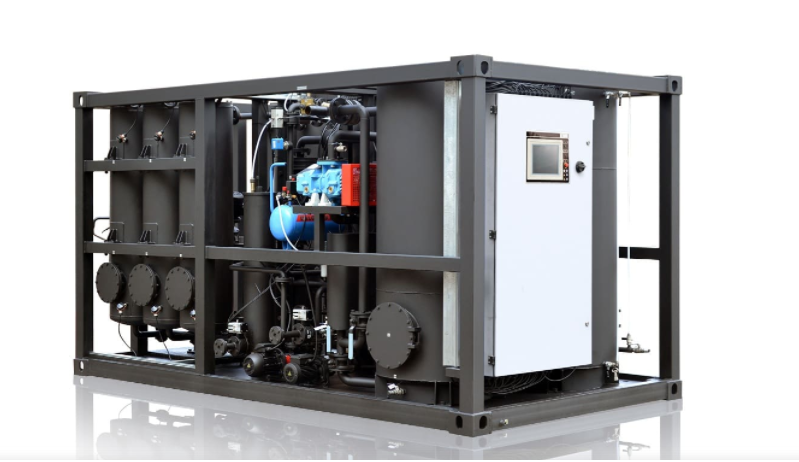
Where oil regeneration units fit in industrial maintenance
In many facilities, oil degradation is not just a fluid issue; it can affect insulation performance, heat transfer, contamination levels, and overall equipment reliability. Regeneration systems are used when standard filtration is no longer enough and the goal is to remove deeper degradation compounds or recover oil quality through a more comprehensive treatment process.
Compared with basic drying or filtration equipment, these units are typically selected for applications where operators need a broader recovery process. In maintenance programs that also involve oil drying equipment or condition verification through fuels testing, regeneration becomes part of a larger fluid management strategy rather than a standalone task.
Typical functions of an oil regeneration unit
A regeneration system is commonly used to reduce contamination and restore oil characteristics through a combination of filtration, heating, adsorption, and process control. Depending on the workflow, the unit may handle suspended particles, moisture, oxidation products, and other unwanted compounds that accumulate during long-term service.
Some systems in this category also support sorbent or zeolite reactivation, which is important in operations where adsorbent material must be reused efficiently. This makes the category relevant not only for direct oil treatment, but also for supporting the consumables and media involved in the regeneration cycle.
Representative GlobeCore solutions in this category
GlobeCore is the main manufacturer represented here, with equipment covering both compact and higher-capacity oil treatment requirements. For example, the GlobeCore CMM-4R Transformer oil regeneration machine is suited to controlled regeneration tasks at a modest processing rate, while the GlobeCore CMM-12R Mobile Oil Regeneration Unit addresses higher-throughput applications where mobility and larger processing capacity are more important.
For smaller-scale field or service work, the GlobeCore CMM-6RL Mobile Oil Regeneration Unit offers another practical format. Supporting equipment in the same ecosystem includes the GlobeCore BRZ and BRPS Zeolite Regeneration Units, as well as the GlobeCore CMM-RP Oil Reactivation Unit, which help maintain adsorbent performance and support continuous regeneration workflows.
How to choose the right system
The best selection usually depends on throughput, mobility, process depth, and utility requirements. Capacity matters when planning treatment time for a given oil volume, but it should be considered alongside power availability, installation space, and whether the system will be used in a fixed maintenance area or transported between sites.
It is also useful to look at the overall process rather than just one machine. Some users need a mobile regeneration unit for field service, while others need a setup that includes drying, reactivation, and post-treatment verification. If the application involves moisture control in the surrounding process environment, related air drying equipment may also be relevant.
Mobile units, reactivation systems, and process support equipment
Not every product in this category serves the same role, and that distinction matters during specification. Mobile oil regeneration units are generally chosen for on-site treatment and service flexibility, while dedicated regeneration or reactivation equipment may be better suited to workshop-based maintenance programs with recurring oil recovery tasks.
Zeolite regeneration units such as the BRZ and BRPS models support the adsorbent side of the process, helping restore media used in oil treatment systems. Equipment such as the CMM-RP Oil Reactivation Unit fits into the same broader maintenance ecosystem by focusing on reactivation cycles that improve operational continuity and reduce waste of process materials.
Why condition verification still matters after regeneration
Even after treatment, oil quality should be checked against the requirements of the application. Regeneration improves usability, but maintenance teams still need to verify whether the processed oil is suitable for return to service and whether additional treatment stages are required.
That is why regeneration equipment is often considered together with test instruments and laboratory tools. Depending on the maintenance workflow, users may also review related tools such as a flash tester when broader oil condition assessment is part of the decision process.
Applications and buying considerations for B2B users
These systems are typically evaluated by maintenance engineers, utilities, service contractors, and industrial buyers who need dependable fluid recovery processes. Common selection factors include expected oil type, contamination severity, treatment volume, operating cycle, available power supply, and whether the unit must integrate with existing maintenance practices.
For B2B procurement, it is often more useful to compare equipment by process role than by headline numbers alone. A compact regeneration machine, a mobile unit, and a zeolite reactivation system may all belong to the same category, but each supports a different operational need. Clarifying that need early helps narrow the shortlist and avoids overspecifying or underspecifying the solution.
Finding the right oil regeneration setup
This category brings together equipment for oil recovery, regeneration, and adsorbent support in industrial fluid maintenance. Whether the priority is mobile treatment, workshop-based regeneration, or reactivation of process media, the most effective choice is the one that matches the actual maintenance workflow, not just the maximum capacity on paper.
If you are comparing options, start with the required treatment objective, site conditions, and expected service volume. From there, it becomes much easier to identify the right regeneration workflow and the most suitable equipment within this industrial oil treatment range.
-
-
-
-
-
-
-
-
-
-
-
-
-
-
-
-
-
-
-
-
-
-
-
-